25 Cozy Reading Nook Ideas
1. The Window Corner Retreat
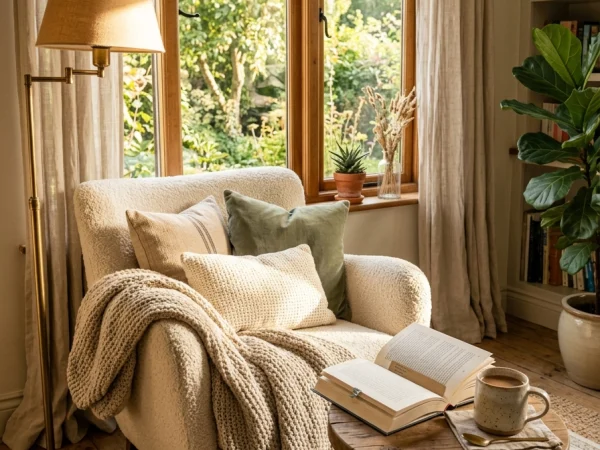
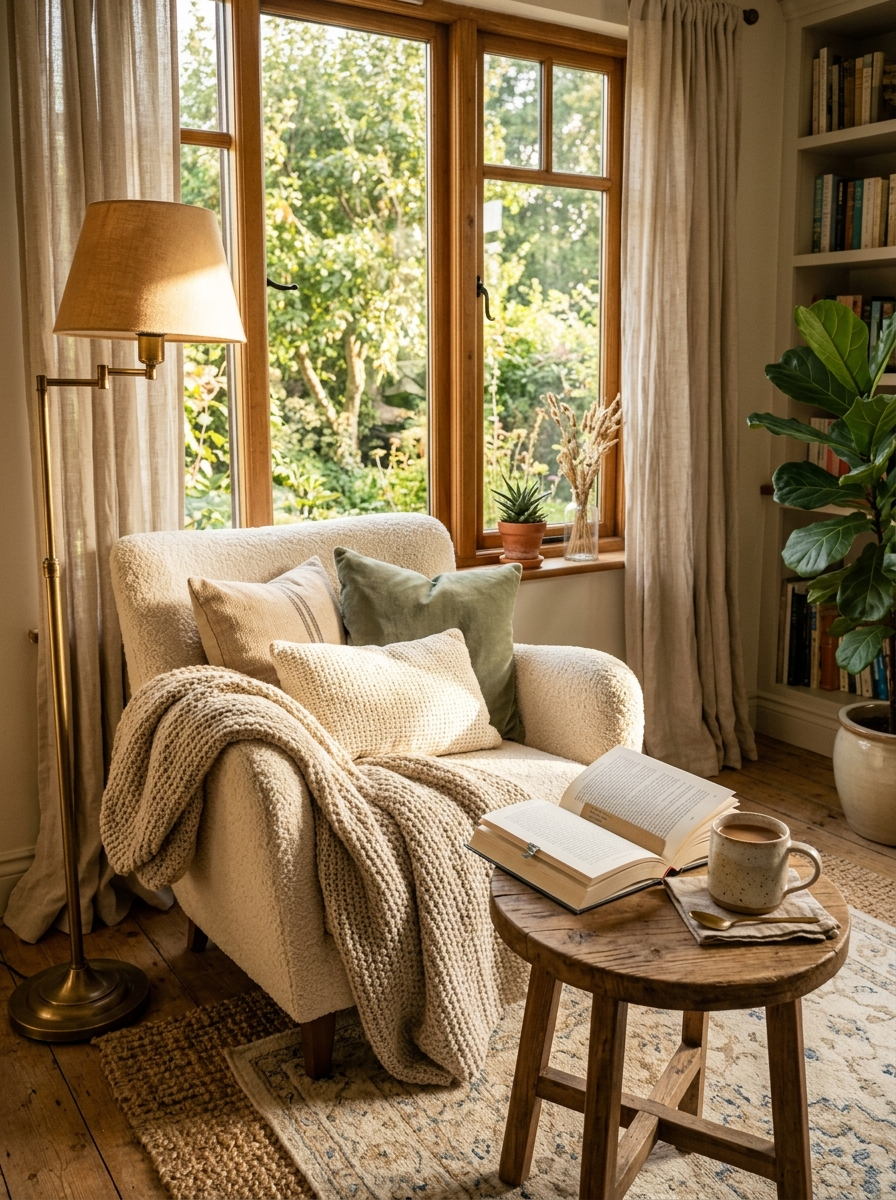
A window corner is one of the easiest places to create a reading nook because natural light already gives the space a calm and inviting foundation. Start with a comfortable chair that fits the corner without overwhelming it, then add a small table for books or a drink. Soft curtains, a textured rug, and a throw blanket can make the area feel intentionally designed instead of simply placing a chair beside a window.
For the coziest result, layer the nook with materials that feel warm and comfortable, such as linen, cotton, boucle, or chunky knits. A floor lamp is useful for evening reading, while a nearby plant can soften the edges of the space. Even a small apartment window can work beautifully when the furniture is scaled correctly and the corner is given a clear purpose.
2. The Oversized Chair Escape
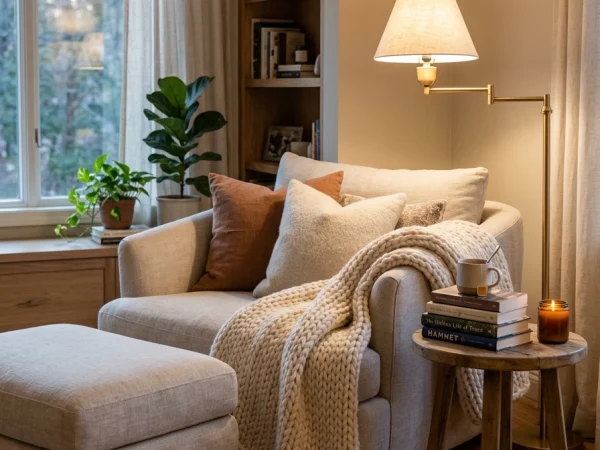
An oversized chair can instantly make a reading nook feel like a personal retreat. Choose one that is comfortable enough to sit in for long periods, then pair it with an ottoman so the area feels more relaxed and complete. The surrounding decor should support comfort without creating clutter. A small table, reading lamp, soft blanket, and a few favorite books are often all you need.
This idea works especially well in an empty living room corner or a spacious bedroom. Keep the colors connected to the rest of the room so the nook feels like part of the overall design. Adding a textured rug underneath can visually define the area and make it feel separate. The goal is to create a spot that immediately invites you to sit down and stay awhile.
3. The Tiny Apartment Reading Corner
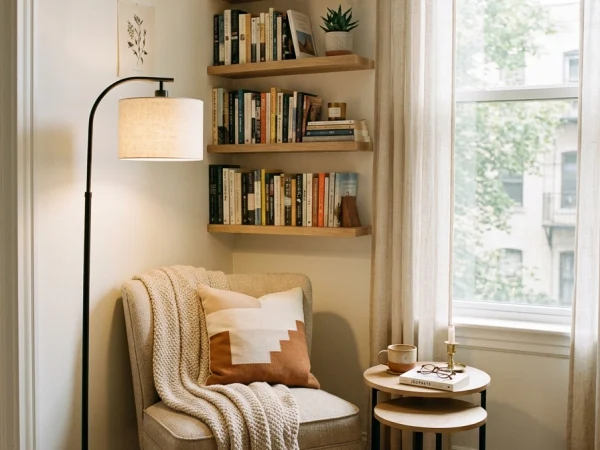
A floor cushion reading nook creates a relaxed and informal atmosphere that works particularly well in small spaces. Layer a large floor cushion or low lounge chair with supportive pillows so the area remains comfortable for longer reading sessions. A soft rug underneath helps define the nook and adds another layer of texture, making the corner feel warmer and more visually complete.
This style is easy to adapt because you can move or rearrange the cushions whenever needed. Add a low table for books and a drink, then use warm lighting to make the space comfortable in the evening. Natural materials such as woven rugs, cotton throws, and wood can give the nook a grounded look. It is a simple way to create a cozy retreat without buying bulky furniture.
4. The Floor Cushion Nook
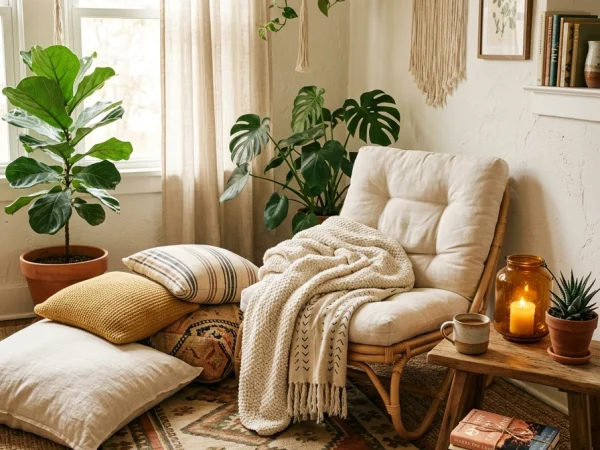
A floor cushion reading nook creates a relaxed and informal atmosphere that works particularly well in small spaces. Layer a large floor cushion or low lounge chair with supportive pillows so the area remains comfortable for longer reading sessions. A soft rug underneath helps define the nook and adds another layer of texture, making the corner feel warmer and more visually complete.
This style is easy to adapt because you can move or rearrange the cushions whenever needed. Add a low table for books and a drink, then use warm lighting to make the space comfortable in the evening. Natural materials such as woven rugs, cotton throws, and wood can give the nook a grounded look. It is a simple way to create a cozy retreat without buying bulky furniture.
5. The Bookshelf Retreat
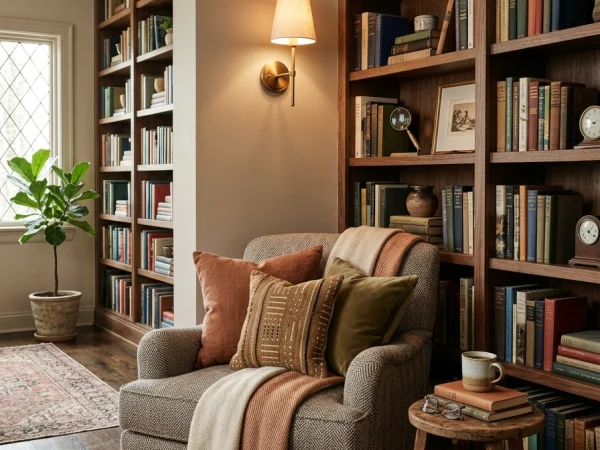
Placing a reading chair near a bookshelf creates an immediate connection between the purpose of the space and the surrounding decor. Whether you have built-in shelving or a simple freestanding bookcase, keeping books within reach makes the nook feel functional and intentional. Add a comfortable chair, warm lighting, and a small table so everything needed for a quiet reading session stays close.
Avoid filling every shelf with books alone. Mix in small decorative objects, framed artwork, or plants to create visual breathing room. The reading chair can also introduce a contrasting texture or color that makes the corner stand out. A soft rug and throw blanket will help balance the structured appearance of shelving, resulting in a space that feels organized while still remaining warm and comfortable.
6. The Bedroom Reading Nook
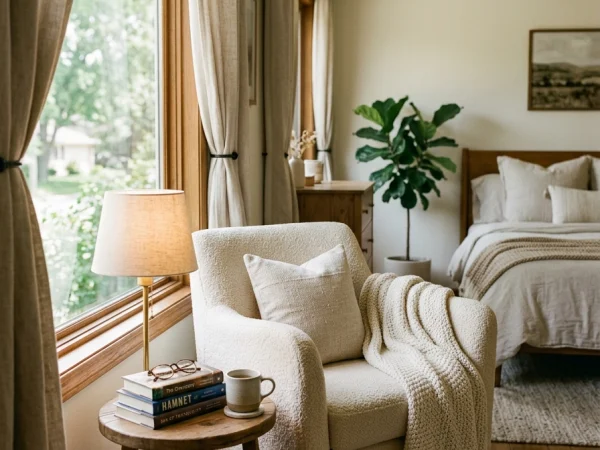
A bedroom reading nook can make the room feel more like a personal retreat rather than simply a place to sleep. Look for an unused corner near a window or beside a dresser, then add a chair that feels different from your bed. This creates a separate zone for relaxing, reading, or enjoying a quiet moment without making the entire room feel overcrowded.
Keep the colors and textures connected to your bedroom so the nook feels cohesive. A chair in a similar neutral tone, a matching throw, or a lamp that complements existing finishes can help tie everything together. If space is limited, use a compact side table or wall-mounted shelf instead. The most important feature is comfort, so choose seating you will genuinely enjoy using.
7. The Closet Reading Hideaway
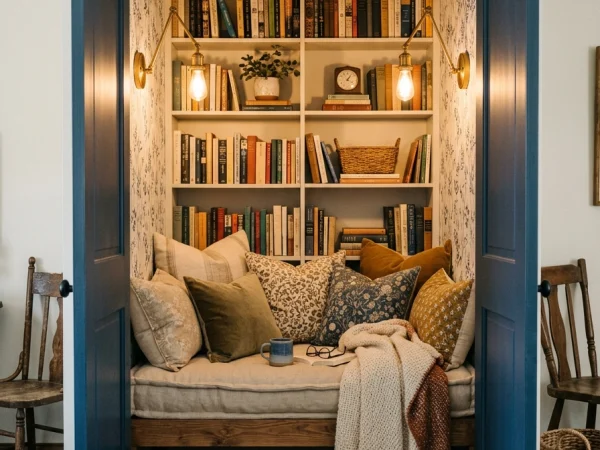
An unused closet can become one of the most charming places for a reading nook because its enclosed shape naturally creates a sense of privacy. After removing unnecessary storage, add a built-in bench or compact seating solution that fits the available depth. Soft cushions and pillows will make the area comfortable, while shelves can use the vertical walls to store books without consuming extra space.
Lighting is especially important in a closet nook because natural light may be limited. Wall sconces, battery-powered lights, or a small lamp can create a warm atmosphere without requiring a major renovation. Consider adding wallpaper or a different wall color to visually separate the nook from the surrounding room. This small transformation can turn overlooked square footage into a memorable and useful retreat.
8. The Bay Window Reading Nook

A bay window is naturally suited to a reading nook because it creates a defined architectural space with plenty of light. A built-in bench is ideal if the room allows it, but a freestanding chair can work just as well. Add cushions and a soft throw to make the seating comfortable, then keep a small table or shelf nearby for books and drinks.
The key is to let the window remain the focal point. Avoid blocking too much natural light with oversized furniture or heavy decor. Light curtains can soften the area while still allowing sunlight into the room. If the nook has storage underneath the seating, use it for extra blankets or books. This creates a beautiful combination of comfort, function, and architectural character.
9. The Moody Reading Corner
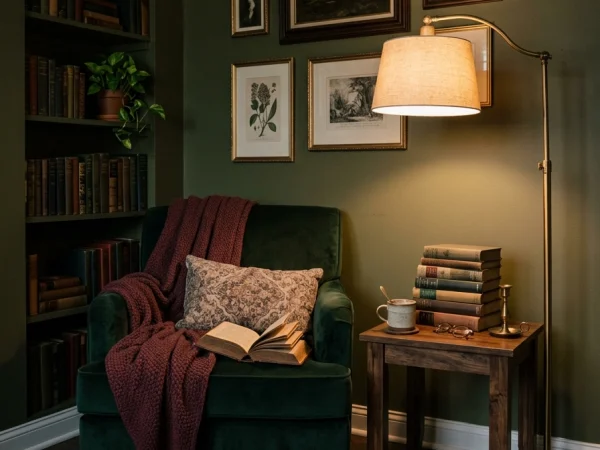
A moody reading nook can feel especially intimate and calming because darker colors naturally create a sense of enclosure. Deep green, charcoal, brown, or muted burgundy can work beautifully when balanced with warm lighting and rich textures. Start with one comfortable chair, then layer the area with a soft throw, a patterned rug, and a lamp that creates a warm pool of light.
This style works best when you embrace contrast instead of trying to brighten every surface. Brass, warm wood, and textured fabrics can prevent darker colors from feeling flat. Add books, vintage artwork, or a small plant to bring personality into the corner. The finished nook should feel slightly separate from the rest of the room, almost like a private little hideaway.
10. The Neutral Layered Nook
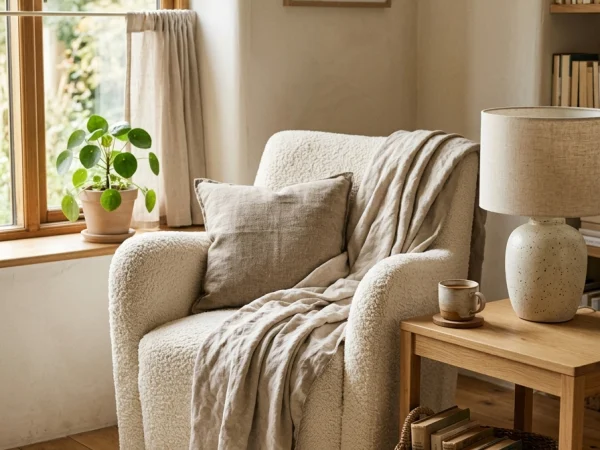
A neutral reading nook does not have to feel plain. The secret is layering different textures so the space remains visually interesting. Combine materials such as boucle, linen, wool, woven fibers, and natural wood while keeping the color palette relatively soft. This creates depth without introducing too many competing colors, making the nook feel calm and easy to integrate into many decorating styles.
Choose one or two subtle accent tones if you want additional warmth, such as muted brown, terracotta, or soft olive. A ceramic lamp and woven basket can add useful decorative detail without cluttering the space. Because neutral decor is flexible, you can easily refresh the nook throughout the year by changing pillows, blankets, or smaller accessories while keeping the main furniture in place.
11. The Earthy Reading Retreat
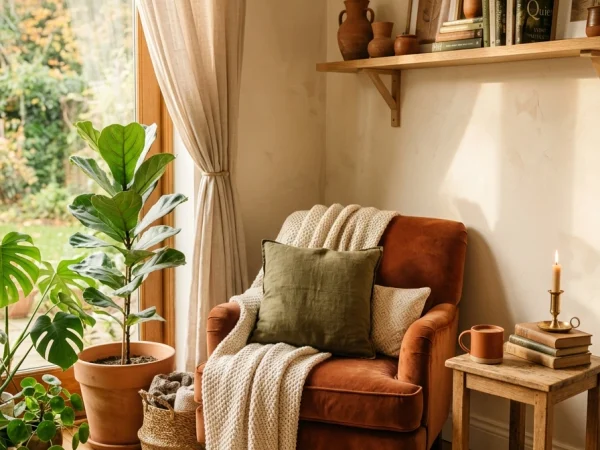
Earthy colors can make a reading nook feel grounded and connected to the rest of the home. Consider warm terracotta, olive green, rust, brown, and soft cream as a starting palette. You do not need to use every color at once. A neutral chair can be paired with earthy pillows and natural materials, while a wooden table or woven rug reinforces the relaxed atmosphere.
Plants work particularly well with this style because they introduce natural shape and color. Choose a few pieces with organic textures rather than filling the corner with too many accessories. Handmade ceramics, woven baskets, and linen fabrics can add character while keeping the overall look cohesive. The finished space should feel warm and collected, rather than overly styled or perfectly matched.
12. The Hanging Chair Reading Nook
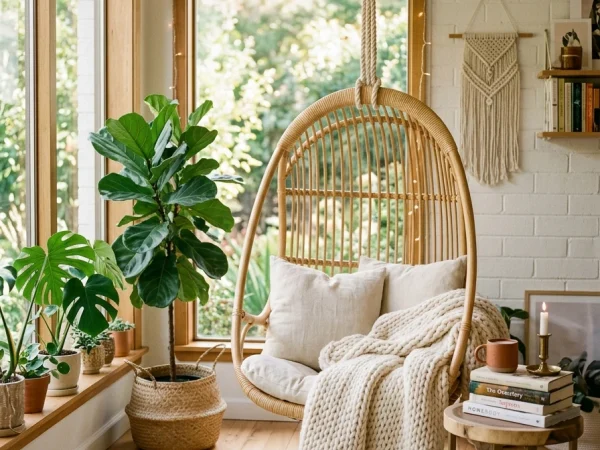
A hanging chair can make a reading nook feel playful while still providing a comfortable place to relax. This idea works best when the chair is professionally and safely installed in a suitable structure, or when you choose a freestanding hanging chair designed for indoor use. Add supportive cushions and a throw so the seating feels practical rather than purely decorative.
Keep the rest of the nook relatively simple because the chair itself will become the focal point. A small table, floor lamp, and nearby basket for books can provide everything you need. A rug underneath helps visually anchor the setup and creates a more defined zone. This style is especially effective in bedrooms, sunrooms, and corners with enough open vertical space.
13. The Fireplace Reading Spot
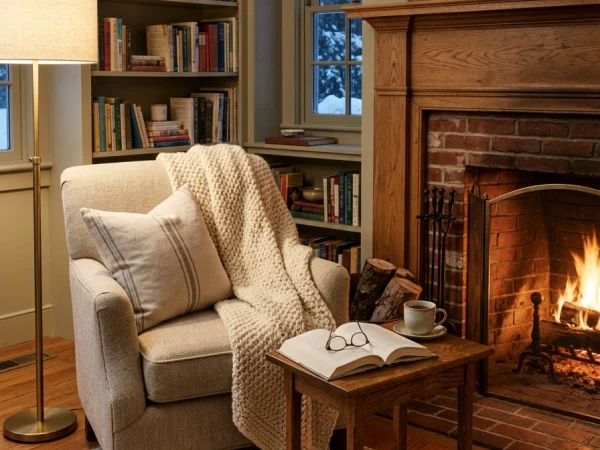
A chair positioned near a fireplace can create one of the most naturally cozy reading environments in the home. Even when the fireplace is not in use, the architectural feature gives the corner a strong focal point. Place the chair at a comfortable distance, then add a table for essentials and a soft throw for extra warmth during colder months.
Use layered lighting so the nook remains useful when the fireplace is off. A floor lamp or wall sconce can provide focused light for reading while maintaining a softer atmosphere than harsh overhead lighting. A textured rug can define the seating area and protect the space from feeling disconnected. Keep accessories minimal so the fireplace and comfortable chair remain the main visual focus
14. The Under-the-Stairs Hideaway
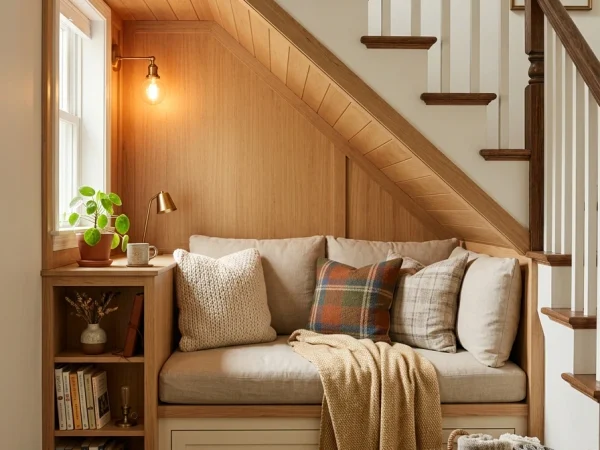
The space beneath a staircase is often ignored, but its enclosed shape can make it perfect for a cozy reading hideaway. A built-in bench is an excellent solution when possible, especially if storage can be incorporated underneath. For a simpler approach, use low seating, cushions, and a compact shelf that fits the available height without making the area feel cramped.
Because under-stair spaces can be darker, warm lighting is essential. Small wall lights or carefully placed lamps can make the nook feel intentional and welcoming. Add a few soft textiles to reduce the hard architectural lines created by the staircase. The finished space can become a functional feature of the home instead of an awkward storage area that rarely gets used.
15. The Plant-Filled Reading Corner
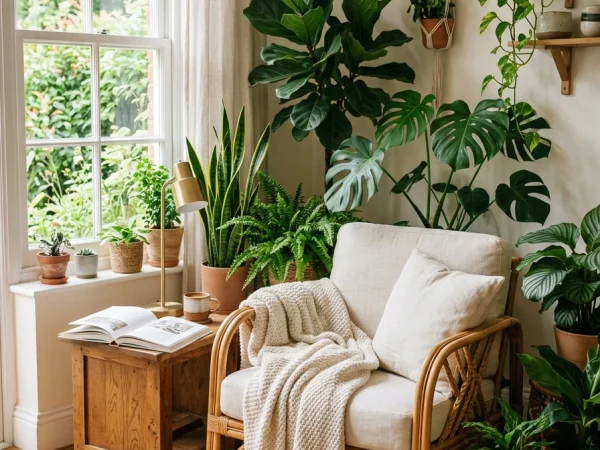
Adding plants around a reading nook can make even a simple corner feel more alive and inviting. Use different heights to create visual depth, such as a tall floor plant beside the chair and smaller plants on a shelf or table. Keep enough open space around the seating so the nook still feels comfortable and practical to use.
The plant containers can also contribute to the overall style. Terracotta, woven baskets, ceramic pots, or simple neutral planters can reinforce the look you want. If the corner receives limited natural light, choose suitable low-light plants or realistic alternatives. Combined with soft fabrics and warm lighting, greenery can make the nook feel like a quiet escape within your home.
16. The Built-In Bench With Storage
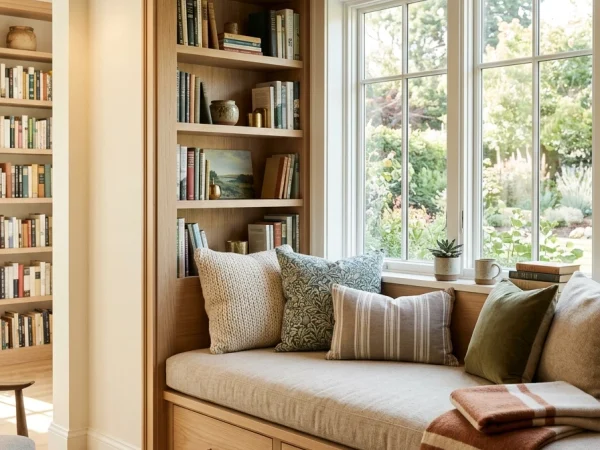
A built-in bench is ideal for a reading nook because it combines seating and storage in one efficient design. Drawers or cabinets underneath can hold books, blankets, or other items that would otherwise create clutter. A thick cushion and several pillows make the bench comfortable enough for long reading sessions while giving the space a softer, more welcoming appearance.
This approach works particularly well near windows, in alcoves, or along unused walls. If a custom built-in is outside your budget, you can create a similar look using a storage bench and tailored cushions. Add shelves nearby for books and a reading light for evenings. The result is a nook that feels permanent and thoughtfully designed while still serving practical everyday needs
17. The Awkward Corner Solution
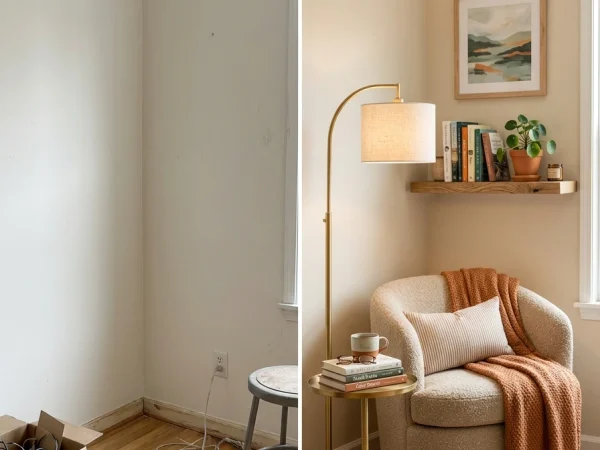
Awkward corners often become places where furniture is pushed temporarily and forgotten. Turning one into a reading nook gives that unused area a clear purpose. Start by measuring the available space, then choose seating that leaves enough room to move comfortably around it. A rounded or compact chair can work particularly well when sharp furniture edges would make the corner feel crowded.
Use a rug or lighting to visually establish the nook as its own zone. A small floating shelf can hold books without requiring a large bookcase, while artwork above the chair can help the corner feel finished. This approach proves that you do not always need more space to improve a room. Sometimes you simply need to give unused space a meaningful function.
18. The Vintage-Inspired Reading Nook
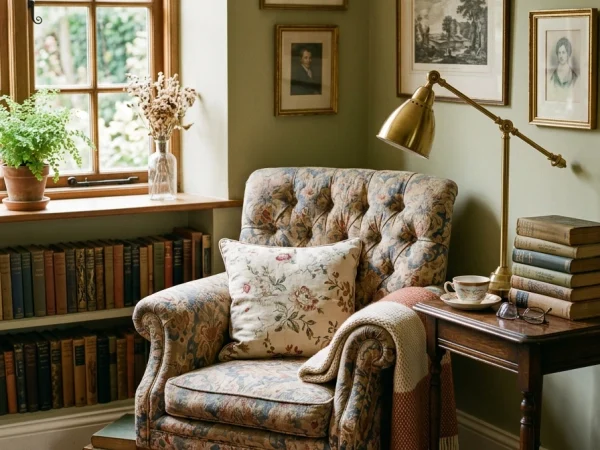
A vintage-inspired reading nook can feel warm and personal because it combines furniture and accessories with visible character. Look for an older-style armchair, a wooden side table, or a brass lamp with a traditional shape. The pieces do not need to be expensive antiques. Thrifted and secondhand finds can create the same collected feeling while keeping the overall project more affordable.
Avoid making every element look old or overly coordinated. Mixing vintage-inspired pieces with simpler modern details can help the nook feel natural and lived in. A patterned rug, framed artwork, and a stack of well-loved books can add personality without requiring excessive decoration. The goal is to create a corner that feels collected over time and genuinely connected to the person using it.
19. The Minimalist Cozy Nook
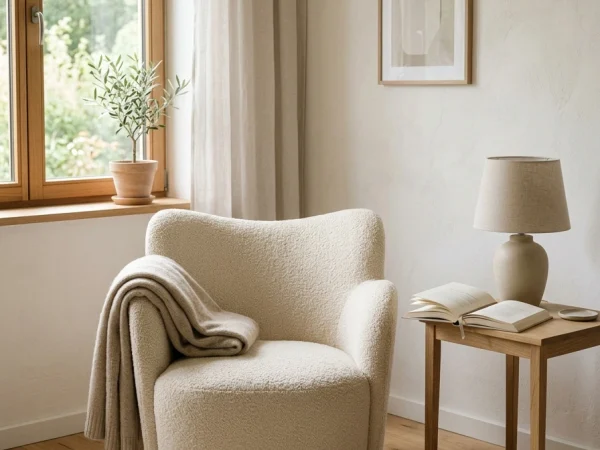
A cozy reading nook does not need to be filled with pillows, shelves, or decorative accessories. A minimalist approach can feel equally inviting when the few pieces you choose are comfortable and thoughtfully selected. Start with one quality chair, a practical light source, and a small surface for essentials. Add a soft throw or textured cushion to introduce warmth without creating visual clutter.
The success of this style depends on proportion and materials. Natural wood, soft fabrics, and gentle lighting can keep a simple nook from feeling cold. Leave some empty space around the furniture so the area feels calm and intentional. This approach is especially useful in modern homes or small apartments where too many decorative pieces could make the room feel visually crowded.
20. The Boho Reading Nook
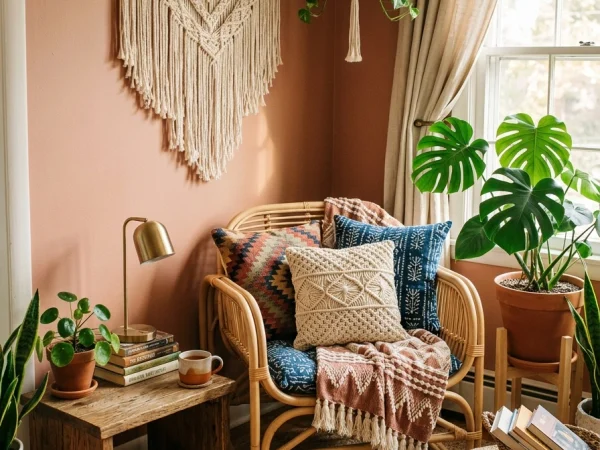
A boho reading nook allows you to combine different textures, patterns, and natural materials in a relaxed way. Start with comfortable seating, then layer in woven textiles, patterned cushions, and a textured rug. Rattan, wood, and handmade accessories can add character while keeping the overall design connected to the warm, informal feeling associated with bohemian interiors.
The key is to maintain some visual balance. Choose a general color direction, such as warm neutrals with terracotta or muted greens, instead of introducing every color at once. Plants, wall hangings, and baskets can add personality without requiring major furniture changes. The finished nook should feel collected and expressive, but still comfortable enough to function as a place for everyday reading.
21. The Hallway Reading Spot
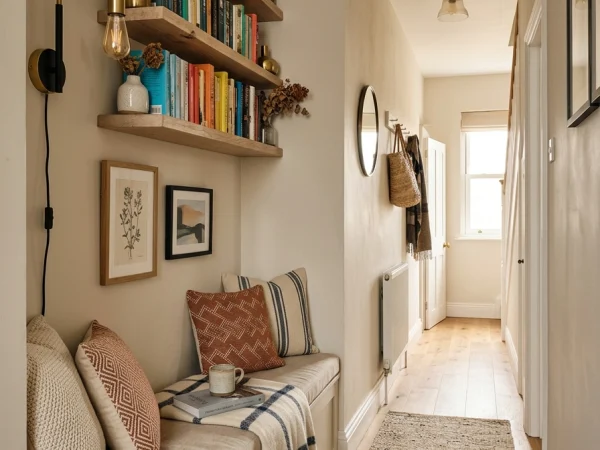
A wide hallway or unused landing can sometimes provide enough room for a surprisingly functional reading spot. The key is choosing furniture with a shallow depth so the pathway remains comfortable and unobstructed. A slim bench or compact chair, combined with wall-mounted lighting and floating shelves, can turn transitional space into something useful without affecting the flow of the home.
Keep the decor intentionally simple because hallways already need clear circulation. A runner rug can visually connect the nook to the rest of the area, while artwork or a small shelf adds personality. This is a smart option for homes where every major room is already furnished and there is no obvious place for another chair. Even transitional spaces can support meaningful daily rituals.
22. The Rainy-Day Retreat
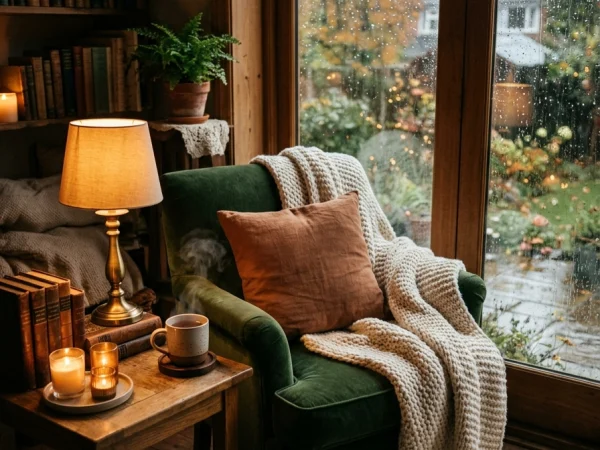
A rainy-day reading nook is less about a specific furniture style and more about creating an atmosphere that makes staying indoors feel special. Position comfortable seating near a window when possible, then use warm lighting and soft layers to contrast with the cooler outdoor view. A thick blanket, warm drink, and nearby books can make the corner feel especially inviting.
Focus on sensory details when styling this type of nook. Soft fabrics, warm wood, gentle lighting, and a comfortable chair all contribute to the experience. Avoid overly bright overhead lights and instead use lamps that create smaller pools of warmth. Even on days when the weather is ordinary, this kind of setup can turn reading into a deliberate moment of rest and relaxation.
23. The Reading Nook With a View
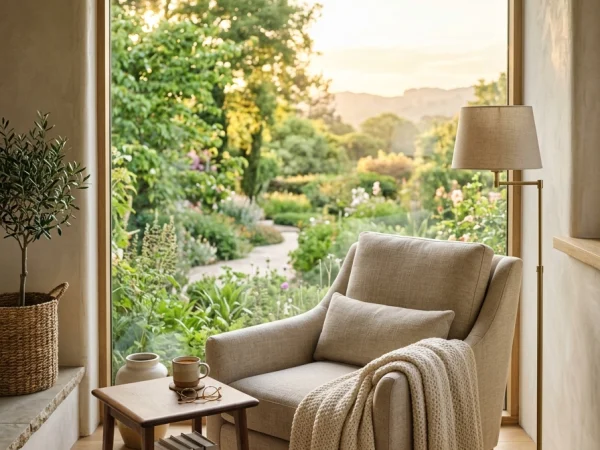
If your home has a window with an attractive view, let that view become part of the reading nook design. Position the chair so you can occasionally look up and enjoy the surroundings without placing it directly in harsh sunlight. Keep the decor restrained so the outdoor scenery remains an important part of the experience rather than competing with excessive accessories.
Choose comfortable seating and add only the essentials nearby. A small table, reading light, and throw may be enough to complete the space. Natural materials work especially well because they visually connect the interior with what is outside the window. This type of nook can feel luxurious even when the furniture itself is simple, because the surrounding view adds atmosphere for free.
24. The Budget-Friendly Reading Nook
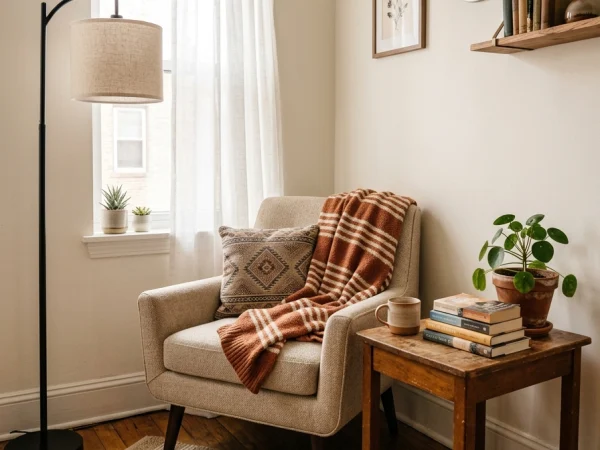
Creating a cozy reading nook does not require expensive furniture or a complete room makeover. Start with a chair you already own or search for affordable secondhand options. Add comfort through inexpensive layers such as a soft blanket, pillow, and small rug. A simple floor lamp can provide dedicated lighting while also making the area feel more intentional and separate from the rest of the room.
Focus your budget on the pieces that affect comfort most, particularly seating and lighting. Decorative details can often come from items you already have, including books, baskets, artwork, or plants. Rearranging existing furniture can also reveal an unused corner that requires very little to transform. The best budget reading nook feels personal and functional rather than trying to imitate an expensive showroom.
25. The Ultimate Personal Escape
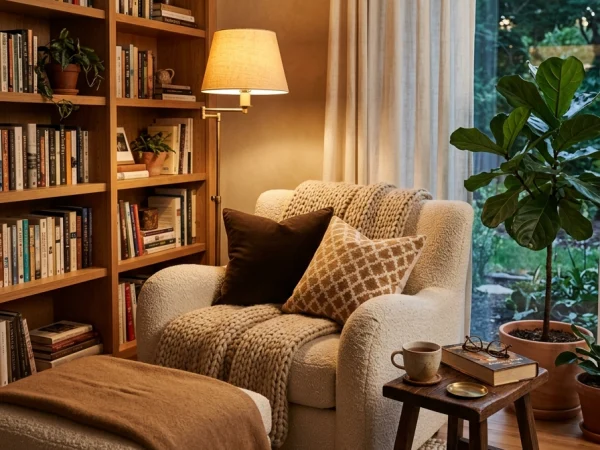
The best reading nook is ultimately one designed around your own habits. Think about whether you prefer bright natural light, complete privacy, extra room for books, or a chair large enough to curl up in. Your answers should guide the design more than a specific trend. A reading nook becomes genuinely useful when it supports the way you actually relax and spend time.
Add personal details that make you want to return to the space. Favorite books, meaningful artwork, a familiar blanket, or a lamp with the right level of light can make a bigger difference than expensive accessories. Once the essentials are in place, allow the nook to evolve naturally. The goal is not perfection, but creating a small part of your home that feels completely your own.