23 Very Small Bedroom Ideas That Feel Warm, Cozy, and Anything But Cramped
Small bedrooms get a bad reputation. People assume “small” means “sacrifice” — less storage, less style, less comfort. But some of the coziest, most inviting bedrooms are tiny ones. A small footprint forces intention: every piece earns its place, and the result often feels like a warm little nest rather than a sprawling, sterile suite.
Below are 23 ideas, each with what it actually costs, who it works best for, and the trade-off nobody mentions. Not every idea suits every room — a few even contradict each other — so use the “Best for” and “Watch out for” notes to figure out which combination fits your space.
Furniture & Layout Ideas
1. Choose a Low-Profile Bed Frame
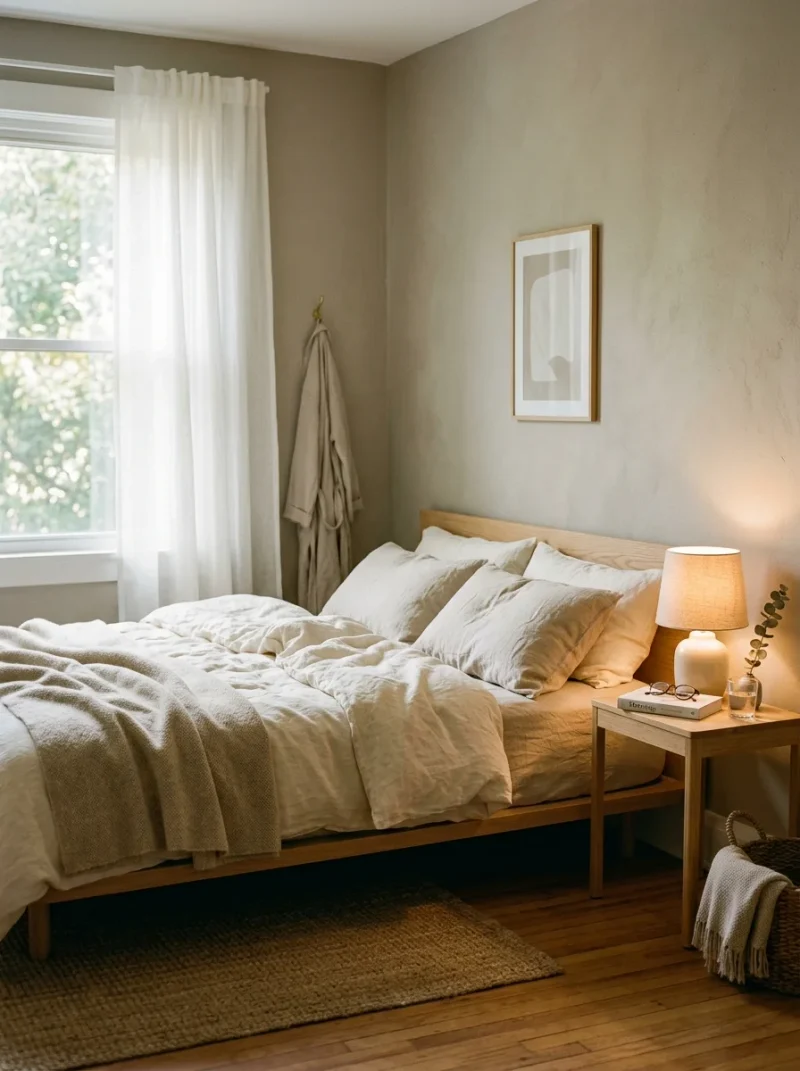
Look for a frame under about 14 inches from floor to top of mattress. The lower the sightline, the taller your ceiling reads — this is one of the cheapest visual tricks in the list since many platform frames run $150–$300.
Watch out for: low frames usually can’t fit standard under-bed storage bins (which need 7–11 inches of clearance). If you need that storage, measure clearance before buying, or pair the frame with slim, flat under-bed drawers made specifically for low clearance.
Best for: renters and anyone prioritizing visual height over storage.
2. Float the Bed Against a Corner
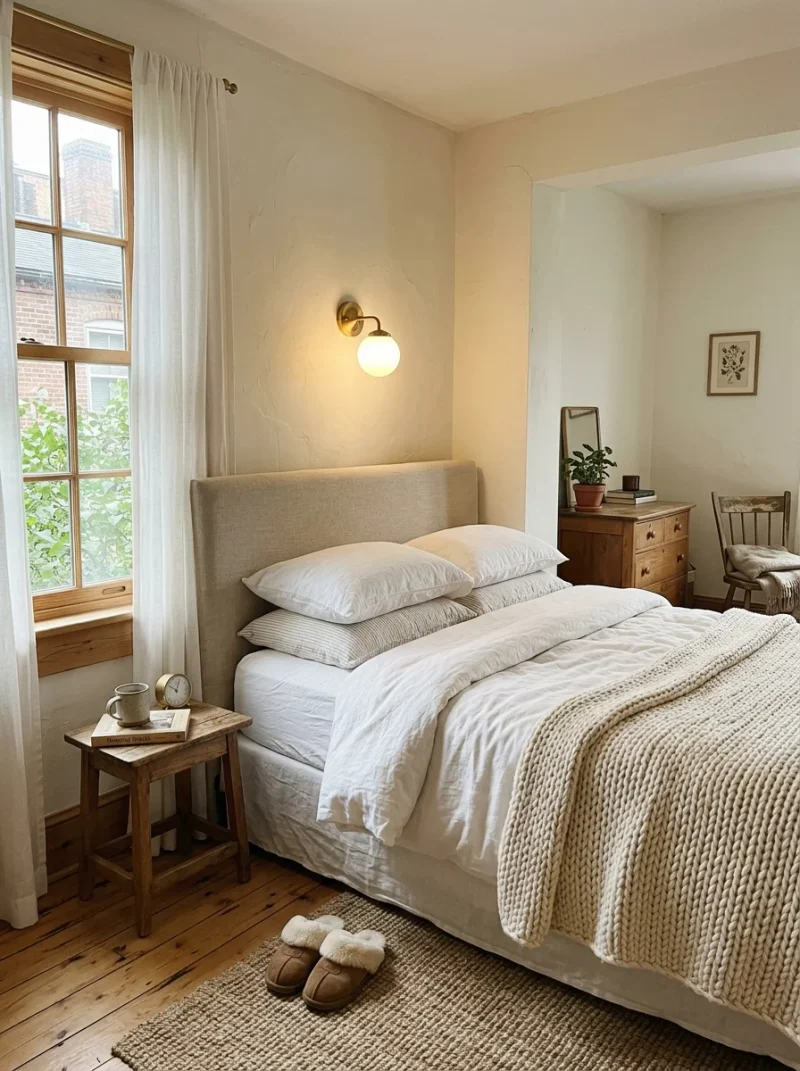
Instead of centering the bed on the longest wall, angle it into a corner. This frees an entire wall for a desk, chair, or just walking space — often the difference between a room that feels like a hallway with a bed in it and one that feels lived-in.
Watch out for: you’ll only have access to one side of the bed, which doesn’t work well for couples. It’s better suited to a single sleeper.
Best for: solo sleepers in rooms narrower than 10 feet.
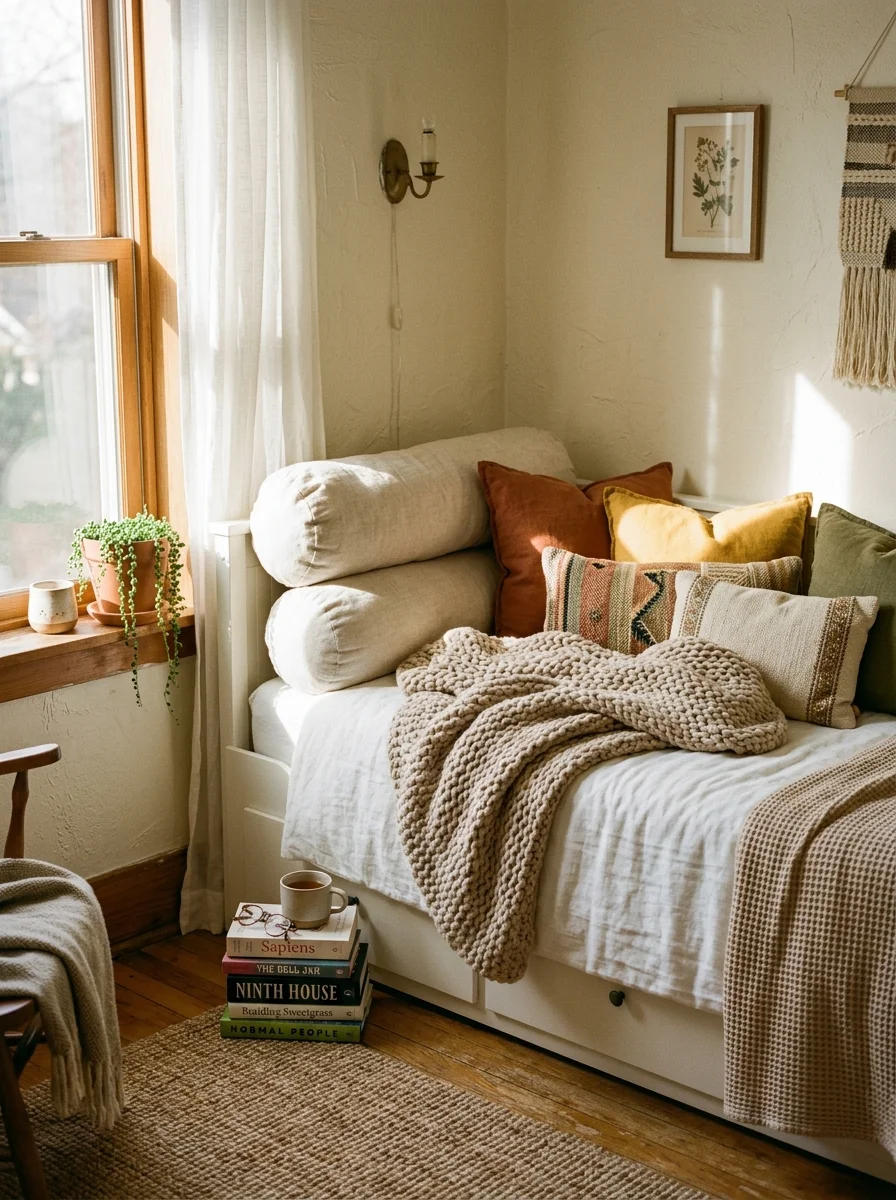
3. Use a Daybed Instead of a Traditional Bed
A daybed with a twin or twin-XL mattress reads as seating during the day and sleeping space at night — genuinely useful if your “bedroom” also has to double as a home office or guest space.
Watch out for: daybeds are usually twin-sized, so this isn’t a fit for anyone sharing the bed regularly.
Best for: studio apartments or multi-purpose rooms (guest room + office + bedroom).
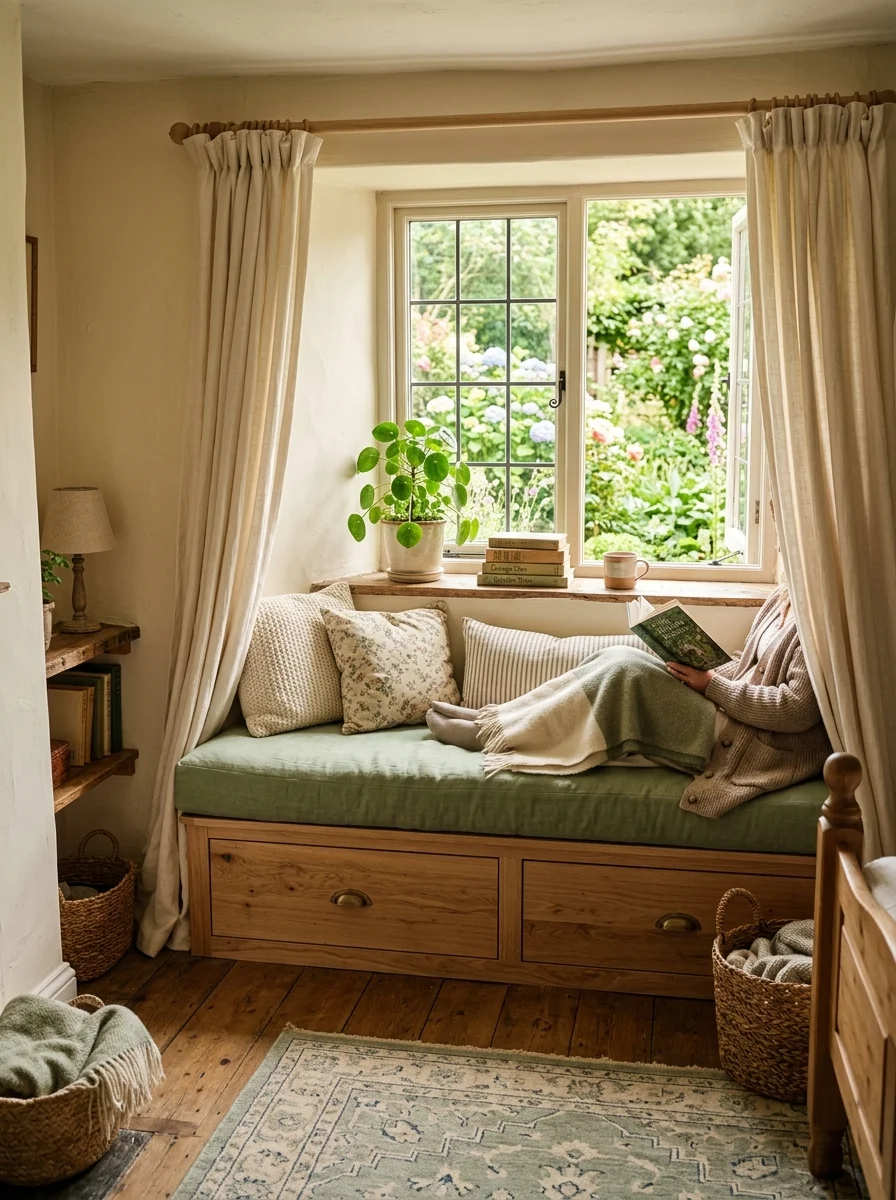
4. Add a Built-In Window Seat
If you have a window nook deeper than about 16 inches, a bench with drawers or lift-up storage underneath turns unused space into a seat and a dresser at once.
Watch out for: this is a carpentry job, not a weekend DIY for most people, and isn’t renter-friendly unless you use a freestanding storage bench instead of a built-in.
Best for: homeowners with an underused window nook; renters should look for a freestanding bench version instead.
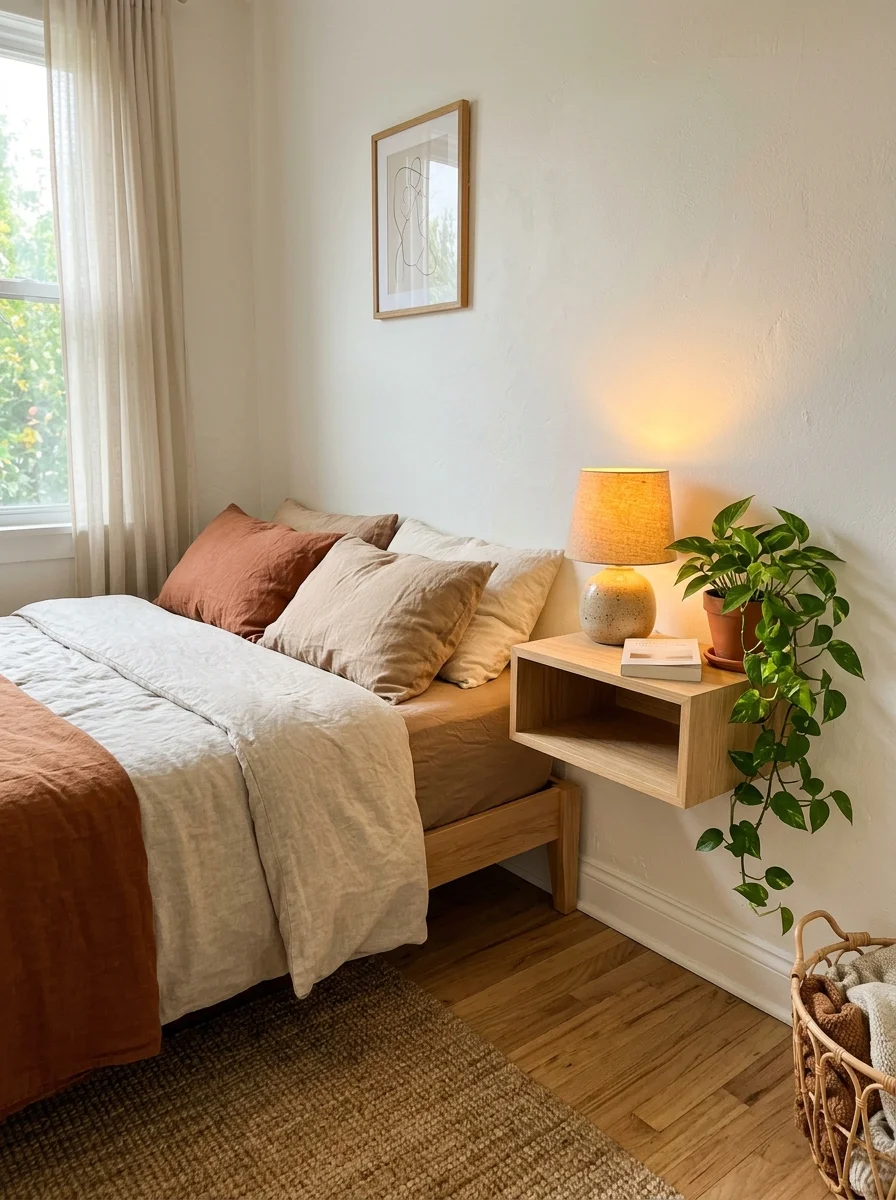
5. Go Vertical With Wall-Mounted Nightstands
A floating shelf nightstand (roughly 12×12 inches) frees the floor around your bed, which matters more than people expect — visible floor space is one of the strongest visual cues for “this room isn’t cramped.”
Watch out for: wall-mounted anything requires drilling into studs for weight-bearing use, which is a no-go for many rental leases. Command-strip-rated floating shelves exist but hold less weight (usually under 5–10 lbs).
Best for: homeowners or renters with landlord permission to patch small holes
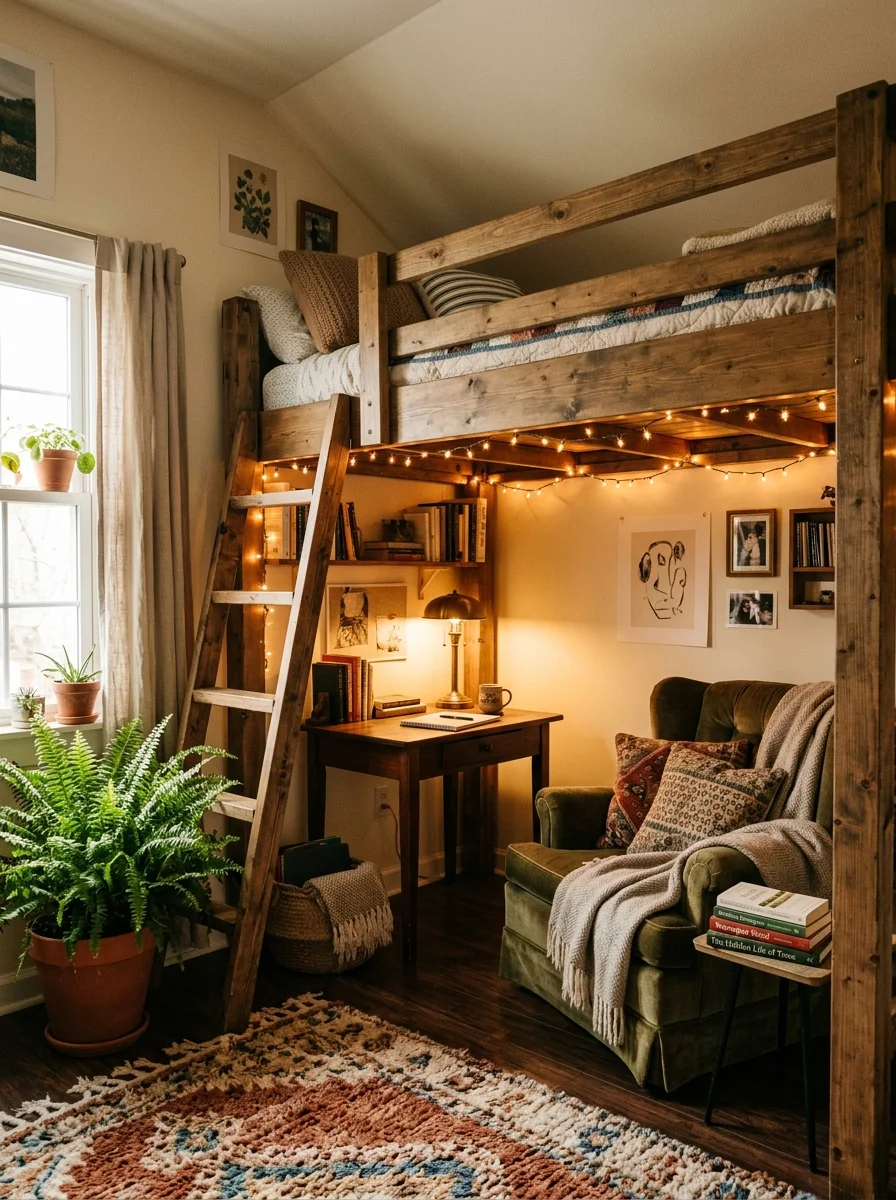
6. Use a Loft-Style Bed With Space Underneath
Raising the bed and using the space below for a desk or reading nook can effectively double your usable square footage in a small room.
Watch out for: this only works with ceilings 8 feet or higher — anything lower and you’ll be ducking to sit up in bed. It’s also one of the more expensive items on this list ($400–$1,000+ for a sturdy frame).
Best for: rooms with high ceilings and a genuine need for a dedicated desk or reading space.
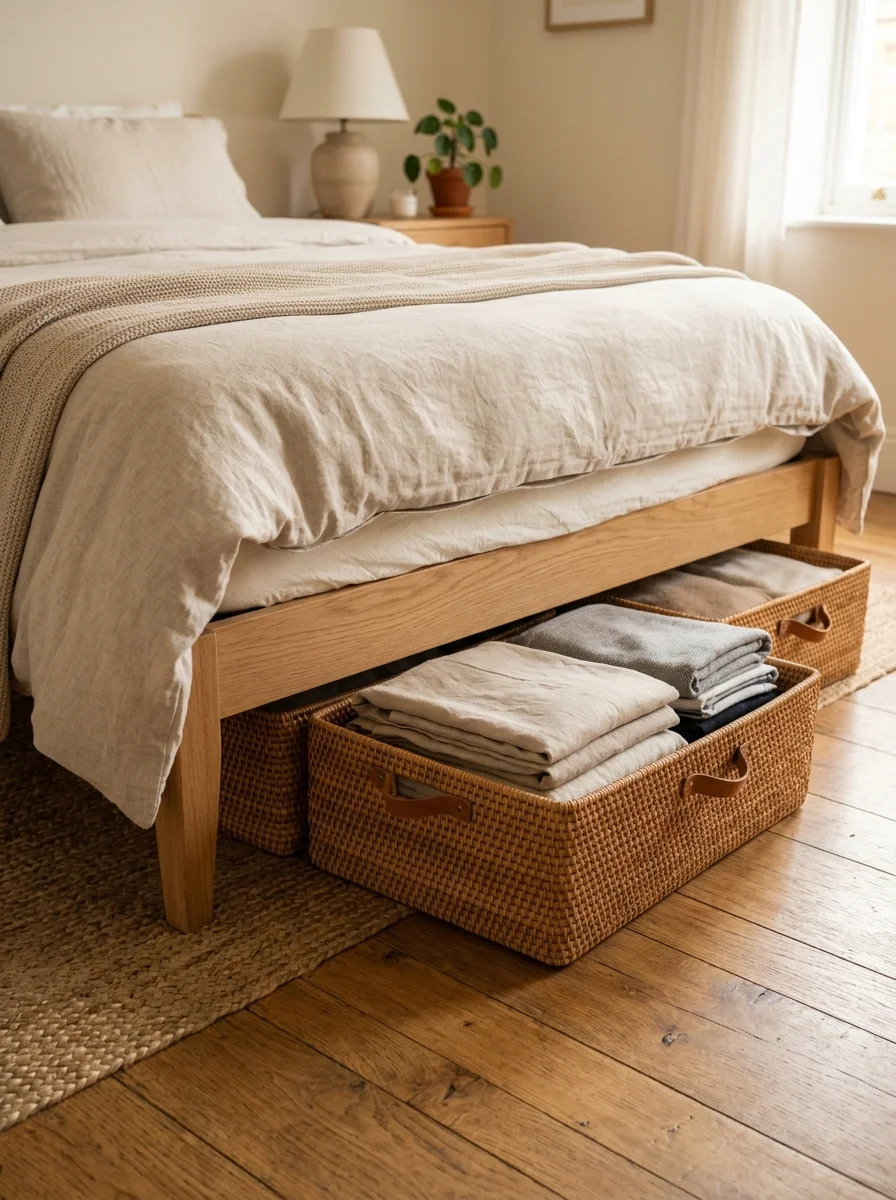
7. Slide in an Under-Bed Storage Cart
Rolling bins with 4-6 inches of clearance work under most standard bed frames (not low-profile ones — see idea #1) and can hold an entire off-season wardrobe.
Watch out for: measure your actual clearance first; a cart that’s a half-inch too tall won’t fit, and returns on bulky storage items are a hassle.
Best for: anyone who owns a standard-height bed frame and needs seasonal clothing storage.
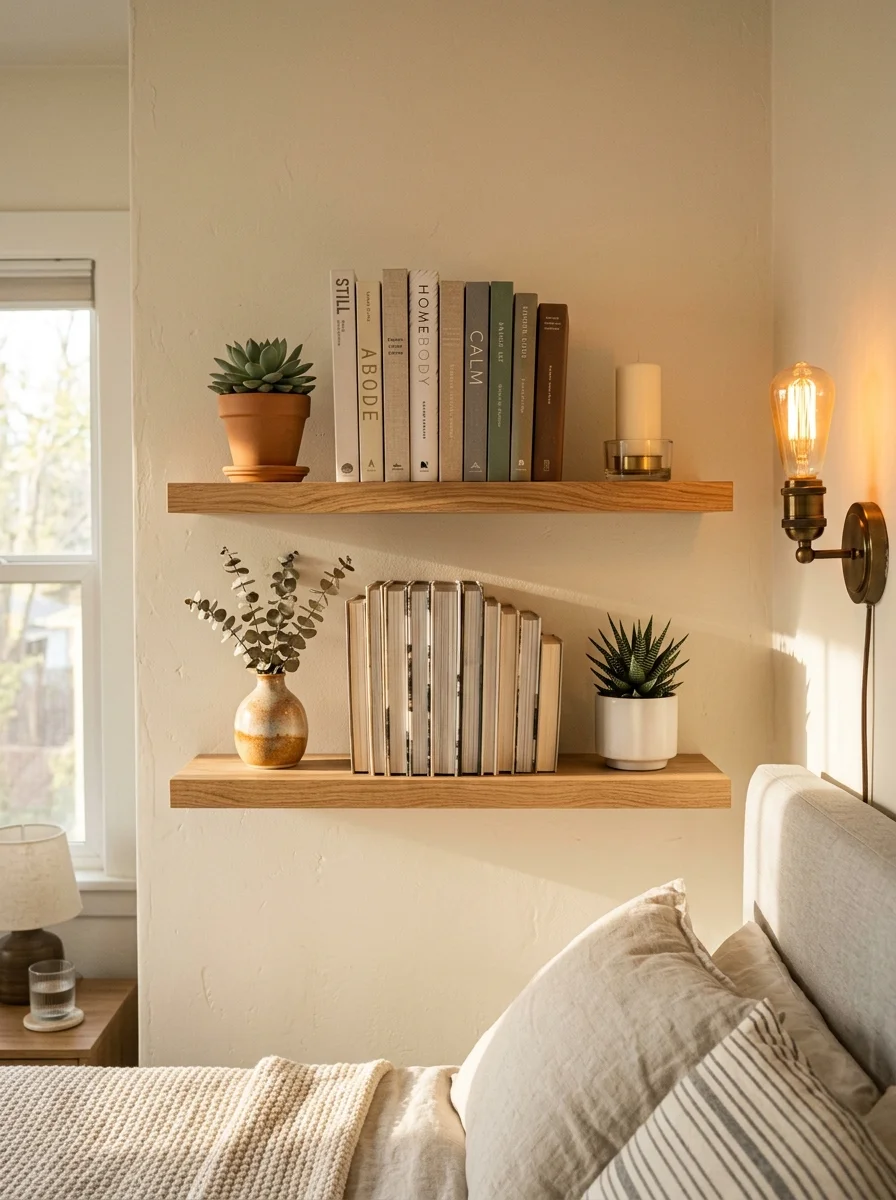
8. Install Open Wall Shelving Instead of Bulky Dressers
A single 36-inch floating shelf can replace a nightstand-and-dresser combo that would otherwise eat 6+ square feet of floor space.
Watch out for: open shelving shows everything, including mess — this only looks cozy if you’re willing to fold and stack items neatly, or use it mostly for books and décor rather than daily-wear clothing.
Best for: people who don’t mind a bit of visual upkeep in exchange for floor space.
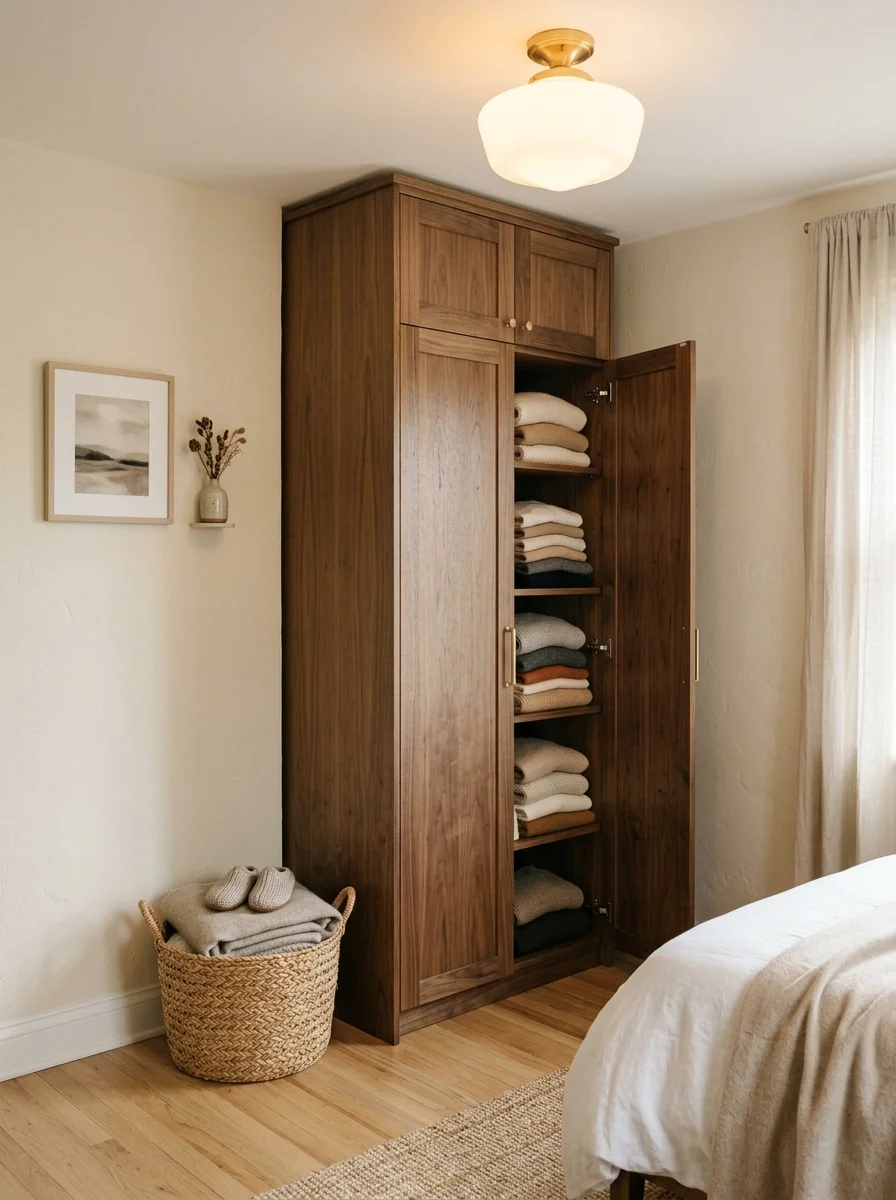
9. Use a Vertical Wardrobe Instead of a Wide One
A wardrobe that’s 24-30 inches wide but goes nearly to the ceiling holds close to the same volume as a wide dresser while taking up half the floor footprint.
Watch out for: the top shelves may be out of easy reach without a step stool — plan to store rarely-used items up there, not daily clothing.
Best for: narrow rooms where a standard 60-inch-wide dresser simply won’t fit.
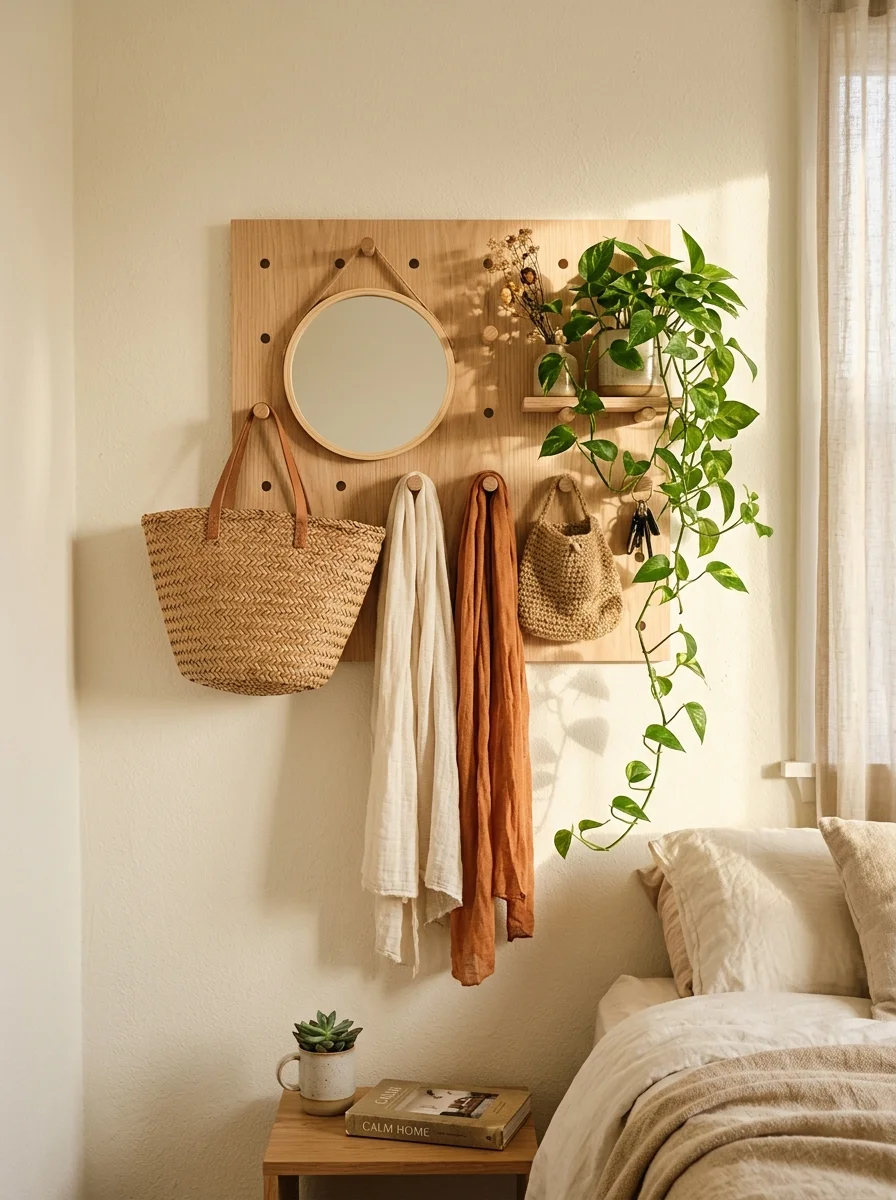
10. Hang a Pegboard for Accessories and Décor
A pegboard costs $20–$40, mounts with minimal wall damage, and can be completely rearranged as your storage needs change — more flexible than built-in hooks or shelves.
Watch out for: it works best for lightweight items (scarves, jewelry, small bags); loading it with heavy items can pull pegs loose over time.
Best for: renters who want flexible, low-commitment storage and display in one.
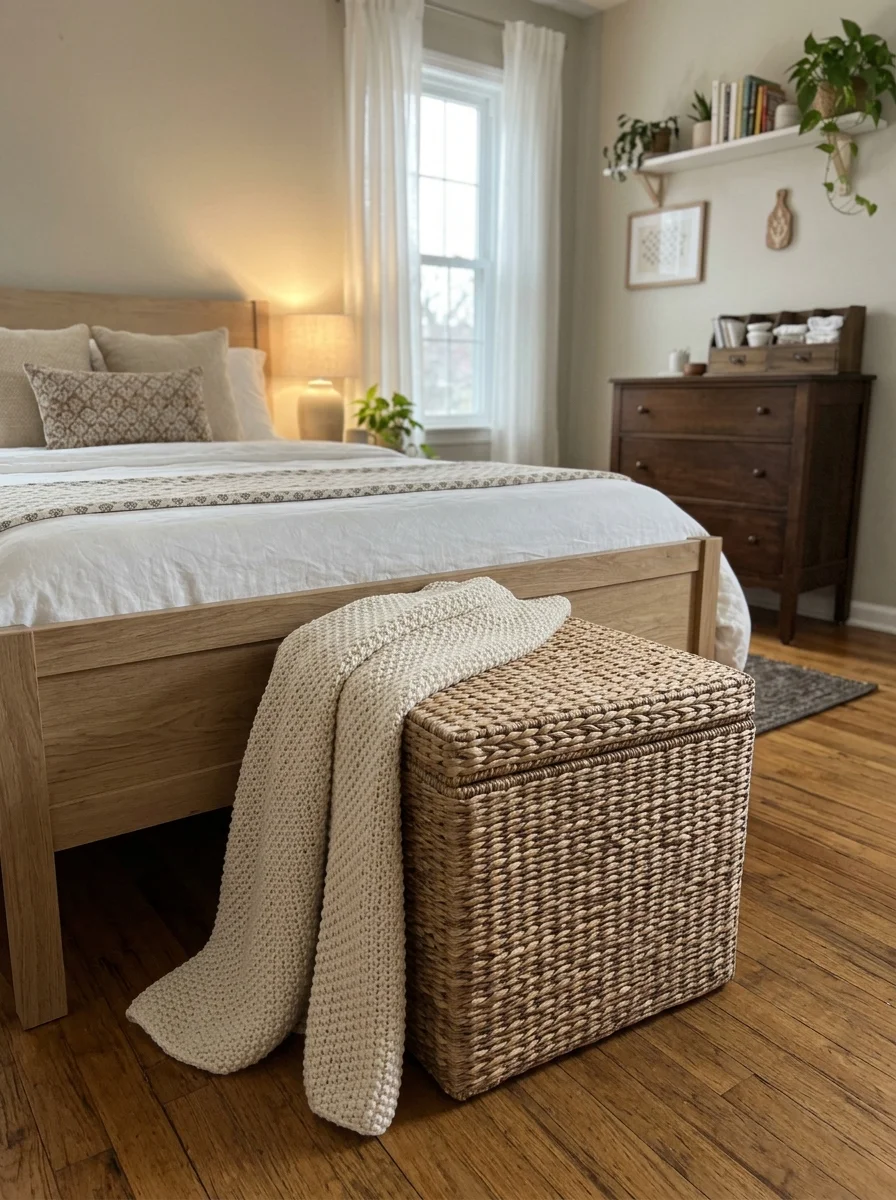
11. Add a Storage Ottoman at the Foot of the Bed
A 40×20-inch storage ottoman gives you a laundry-folding surface, extra seating, and hidden storage without needing to be mounted or built in — genuinely one of the easiest wins on this list.
Watch out for: it needs at least 20 inches of clearance at the foot of the bed to open properly, which some very tight layouts (bed against two walls) simply don’t have.
Best for: almost anyone — one of the lowest-effort, lowest-risk additions on this list
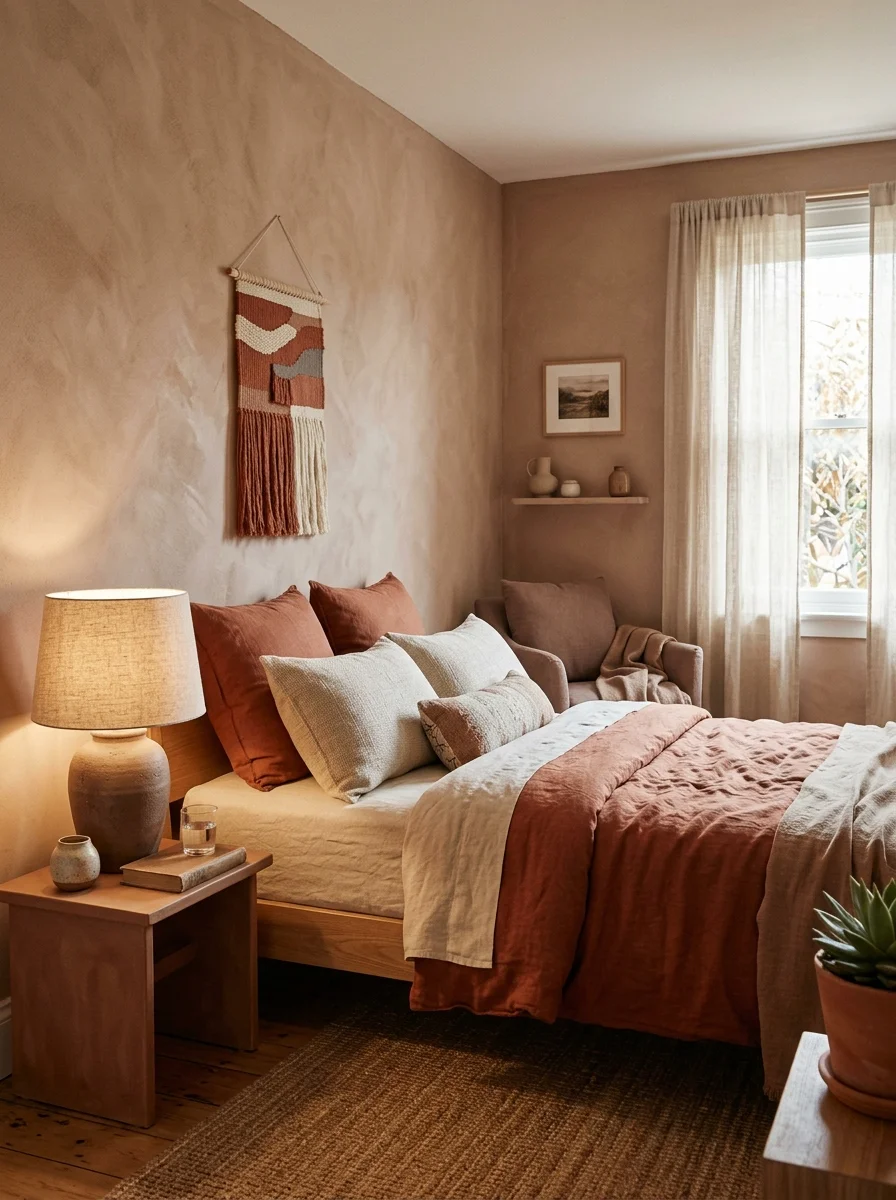
12. Stick to a Warm, Monochromatic Palette
Using 2-3 shades of the same warm hue (terracotta, cream, soft brown) reads as cohesive and calm, and avoids the visual “cutting” effect that high-contrast color blocking creates in small rooms.
Watch out for: monochromatic doesn’t mean flat — without texture variation (see idea #13), an all-one-color room can look unfinished rather than intentional.
Best for: rooms under 100 square feet where you want a calm, grounding feel.
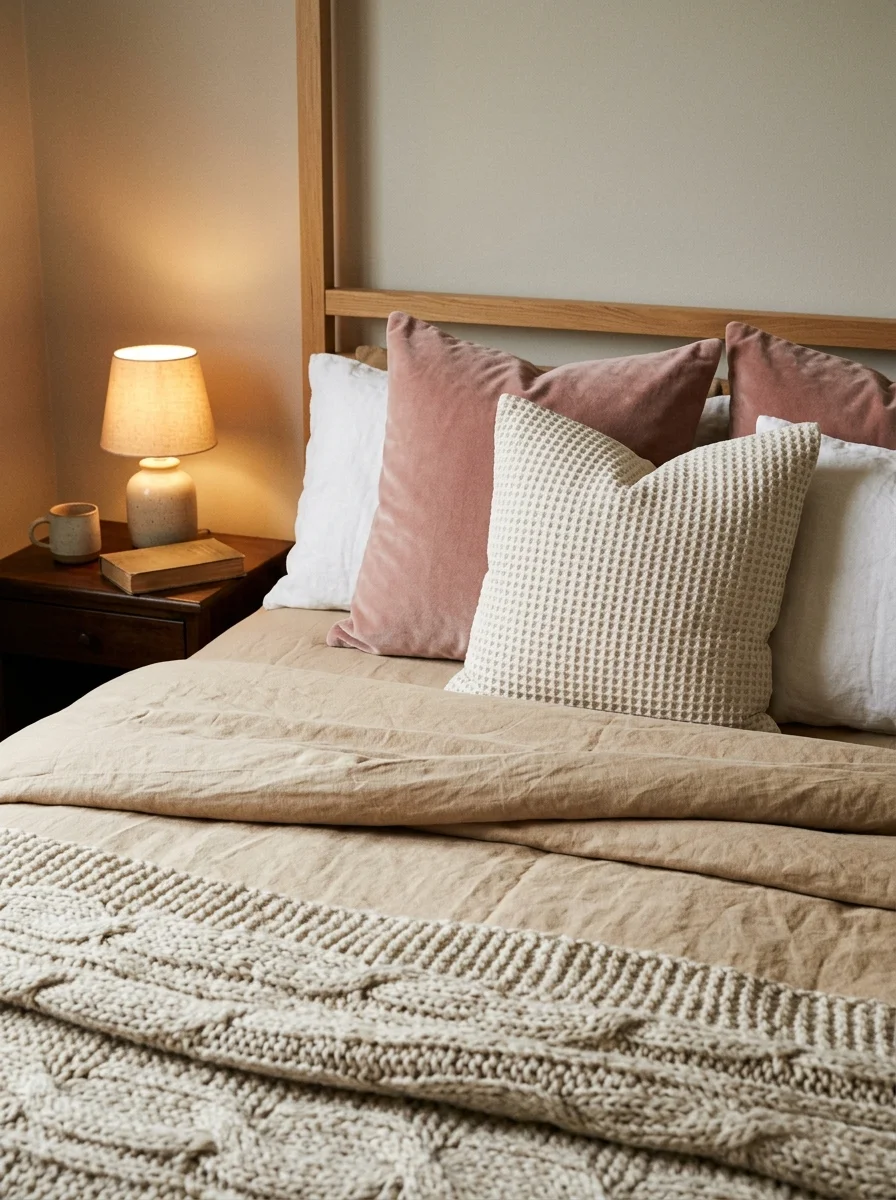
13. Layer Different Textures Instead of Patterns
Linen, chunky knit, and velvet in the same color family create visual depth that busy patterns can’t in a tight space — patterns tend to compress a small room visually, while texture doesn’t.
Watch out for: more than 3-4 distinct textures in one small room starts to look cluttered rather than layered; pick a few and repeat them.
Best for: anyone who wants a “cozy” look without the visual noise of prints.
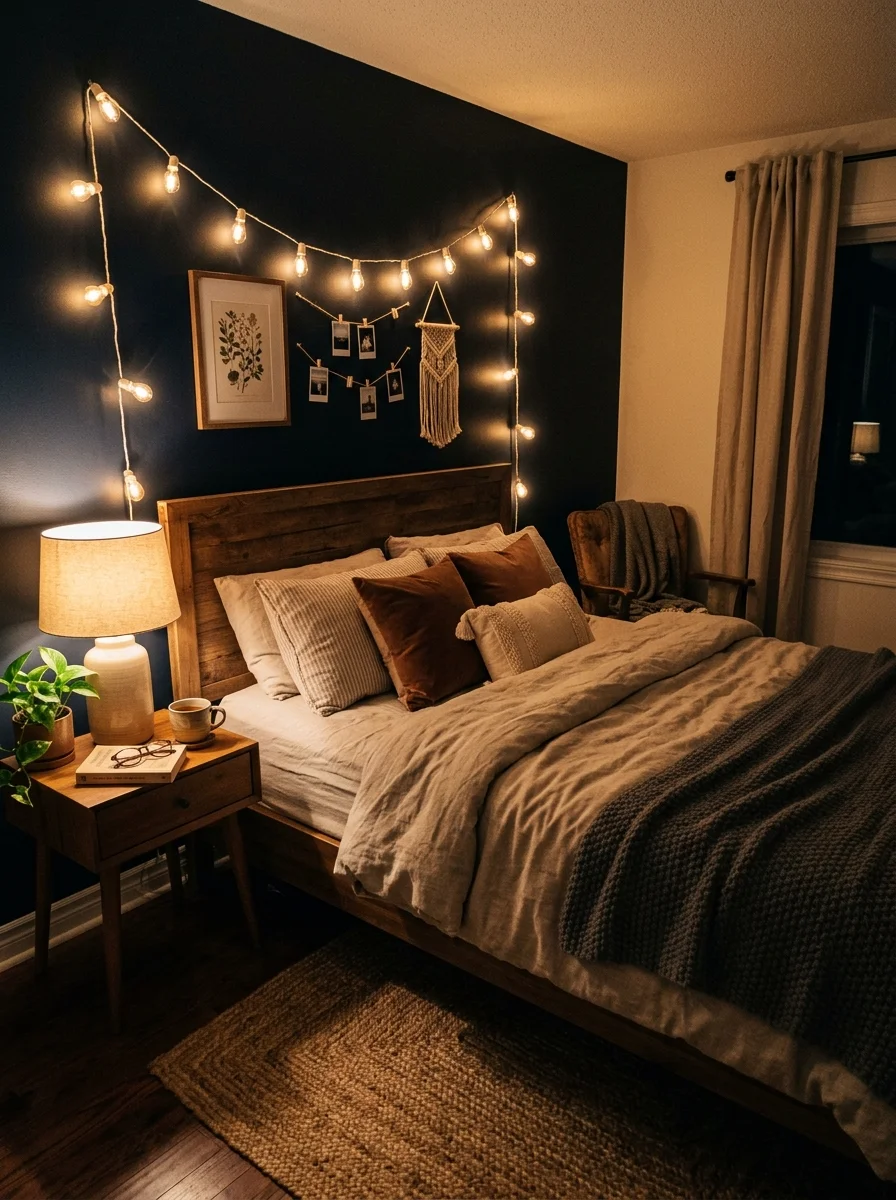
14. Use Soft, Warm-Toned Lighting Instead of Overhead Lights
Swap a single overhead fixture (often harsh, flat light) for 2-3 warm-toned (2700K) lamps or sconces placed at different heights — this single change does more for “cozy” than almost anything else on this list, and can cost under $50 total.
Watch out for: too many light sources on dimmers left at different brightness levels can look messy rather than ambient — keep bulb temperature consistent across all fixtures.
Best for: every small bedroom, honestly — this is close to a universal upgrade
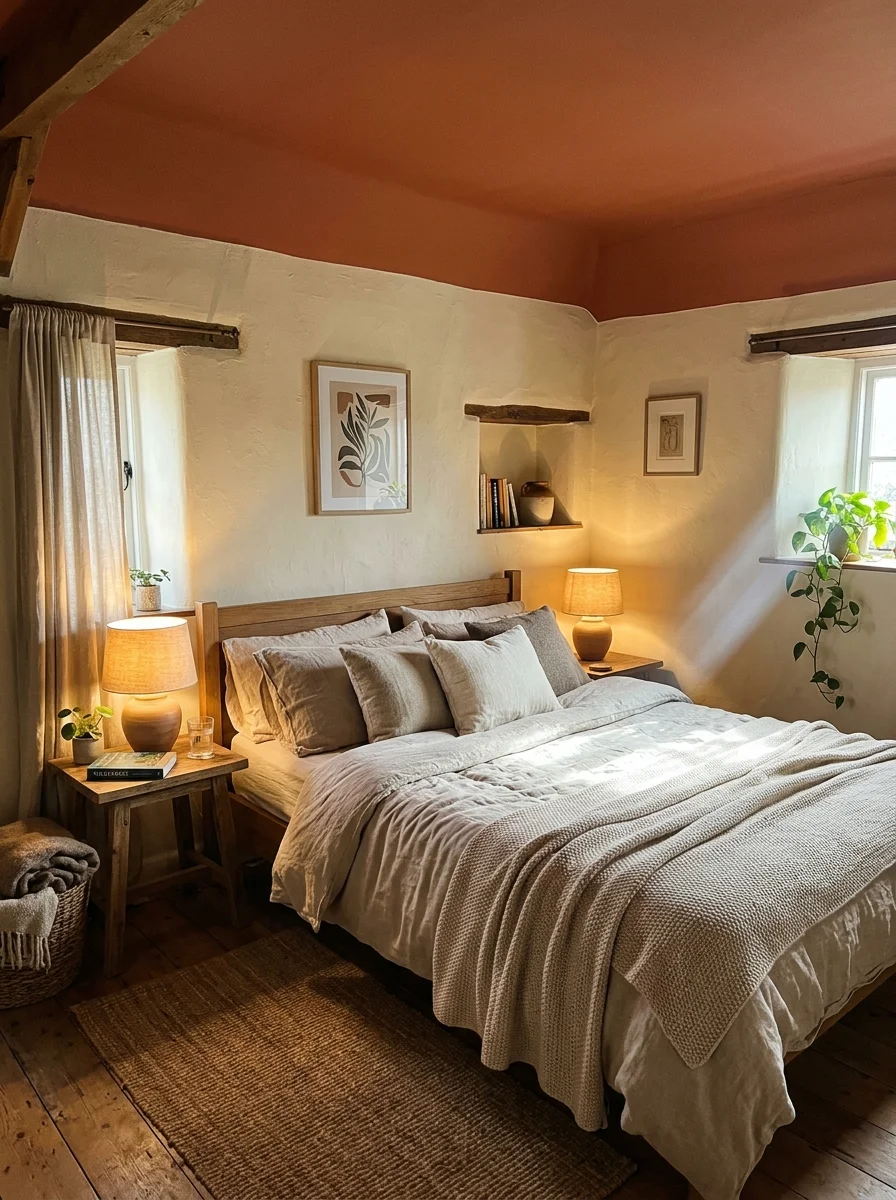
15. Paint the Ceiling to Add Coziness (Not Just the Walls)
A ceiling in a deep, warm tone (think clay, deep olive, or espresso brown) can make a small room feel like an intentional cocoon rather than a low-ceilinged box — the opposite of the usual “paint it white to feel bigger” advice, and it often works better in genuinely tiny rooms.
Watch out for: this only works in rooms with decent natural light during the day; in a room with little daylight, a dark ceiling can feel heavy rather than cozy. Test with a large paint swatch on the ceiling for a few days first.
Best for: small bedrooms with good window light and 8+ foot ceilings.
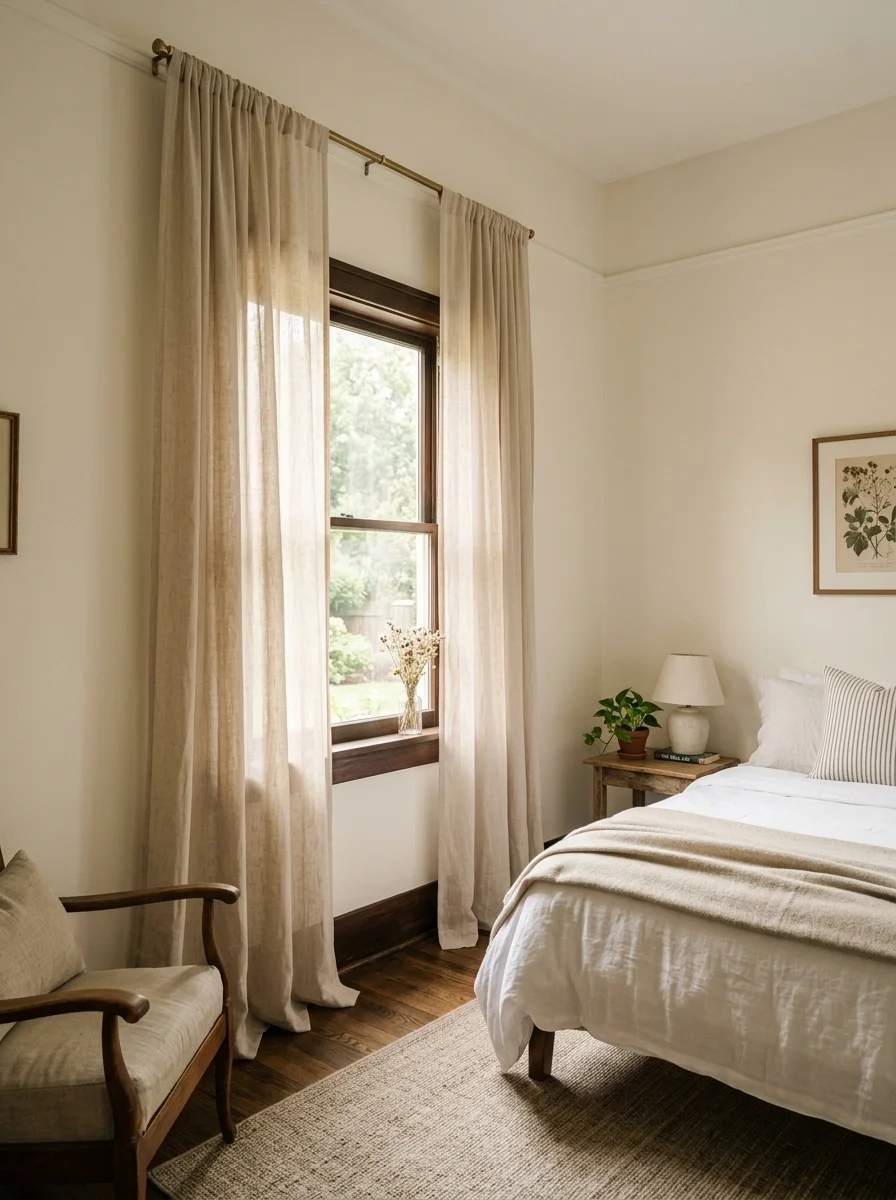
16. Hang Curtains Higher Than the Window Frame
Mount the rod 4-6 inches above the window frame (or closer to the ceiling) and let curtains fall to the floor — this is a free or near-free change if you already own curtains, and it’s one of the most reliable ways to make a room read taller.
Watch out for: curtains that are too short for the higher mount will look worse than not raising the rod at all — measure the new drop length before buying or rehanging.
Best for: every small bedroom with at least one window; very low effort, low cost
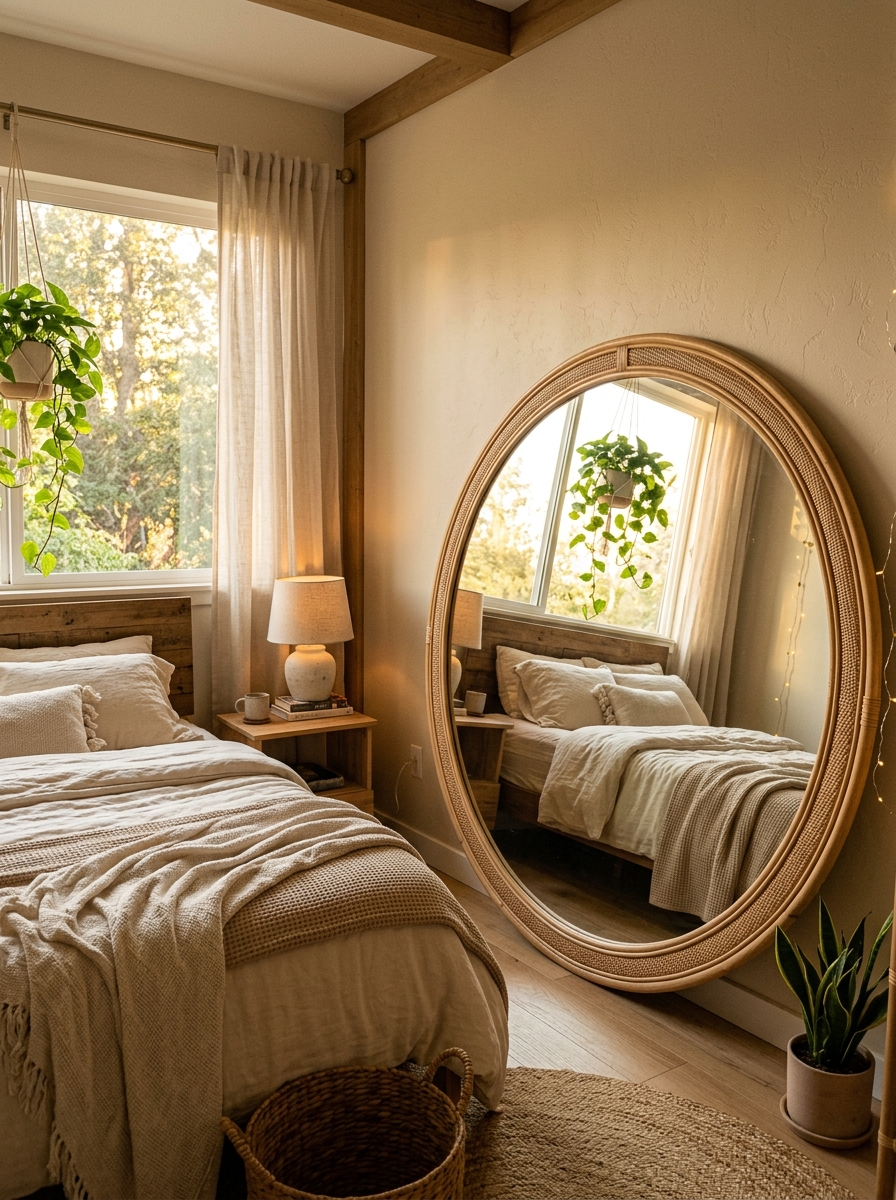
17. Use a Large Mirror to Expand the Room Visually
A mirror placed opposite a window (not opposite the bed, which can feel unsettling to some people) bounces daylight around the room and visually doubles the sense of depth.
Watch out for: a mirror facing a cluttered corner will reflect and double that clutter, so place it to reflect your tidiest wall or the window itself.
Best for: rooms with at least one good window and a clean wall to reflect.
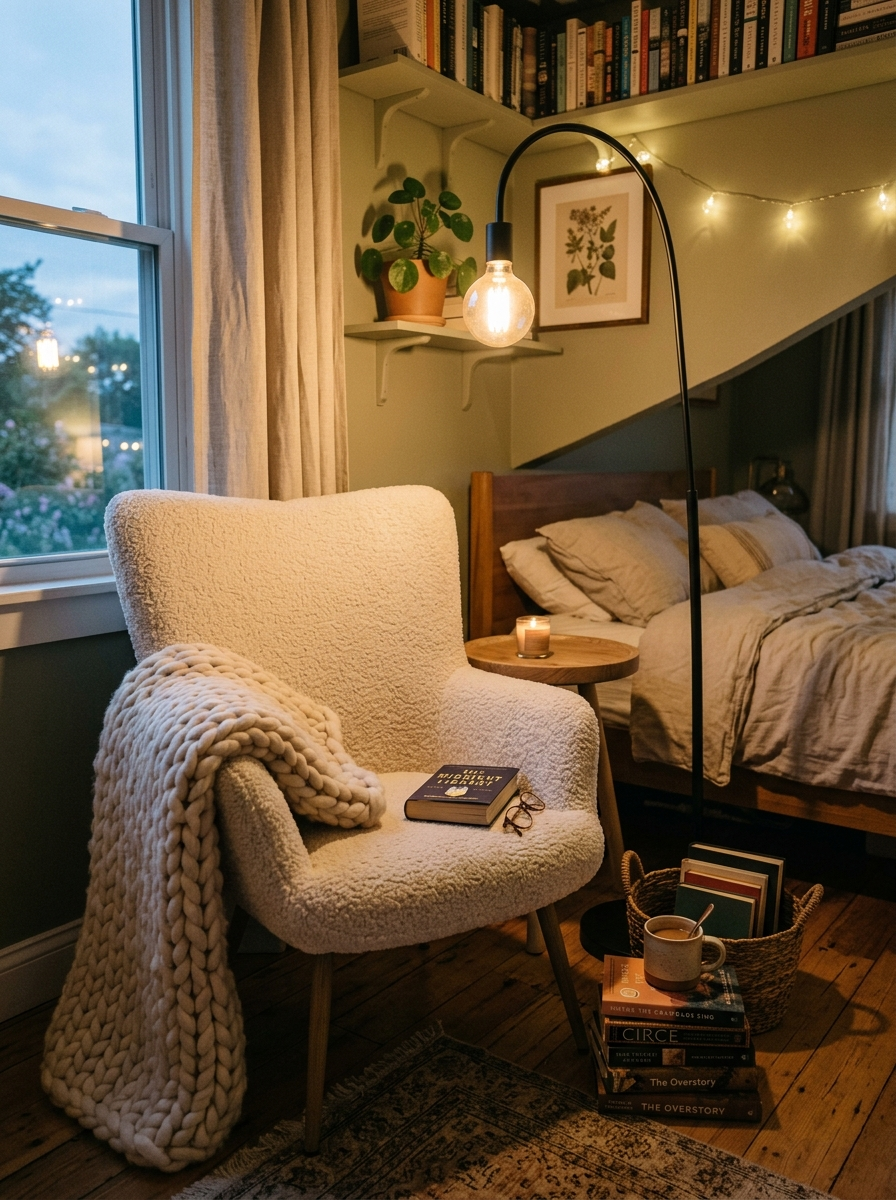
18. Add a Small Reading Corner With a Single Armchair
A slim armchair (under 28 inches wide) plus a floor lamp needs roughly 9 square feet total — often exactly what’s left over in a corner after the bed and wardrobe are placed.
Watch out for: measure the corner before buying; armchairs are hard to return once assembled, and even a few inches too wide will block a doorway or closet.
Best for: rooms with one genuinely unused corner (not a walkway).
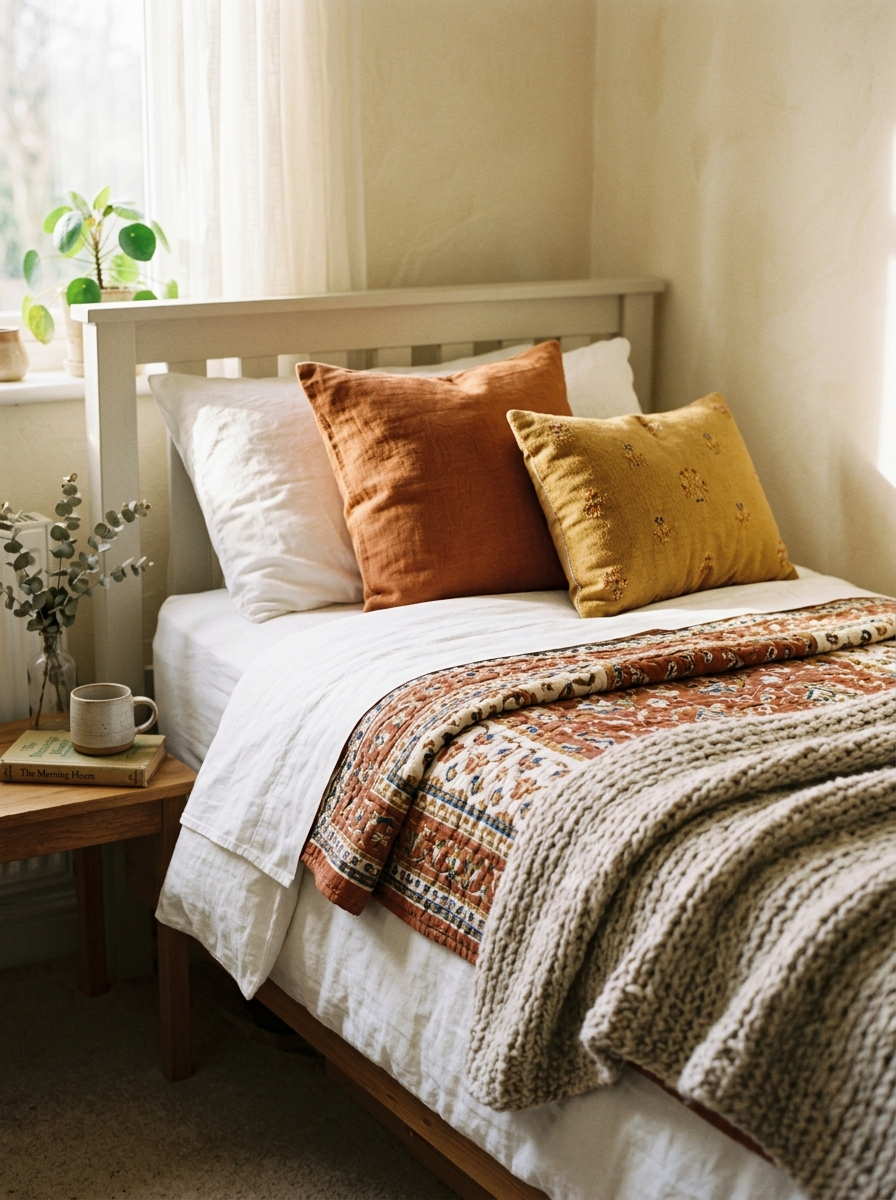
19. Dress the Bed With Layers, Not Just a Comforter
A flat sheet, a quilt, a knit throw, and 2-3 varied cushions cost roughly the same as one heavier comforter but read as far more intentional and hotel-like.
Watch out for: too many cushions on a small bed actually shrinks the visual sleeping space — 2-3 is usually the sweet spot; anything more starts to look like you’re compensating.
Best for: every bed, regardless of room size.
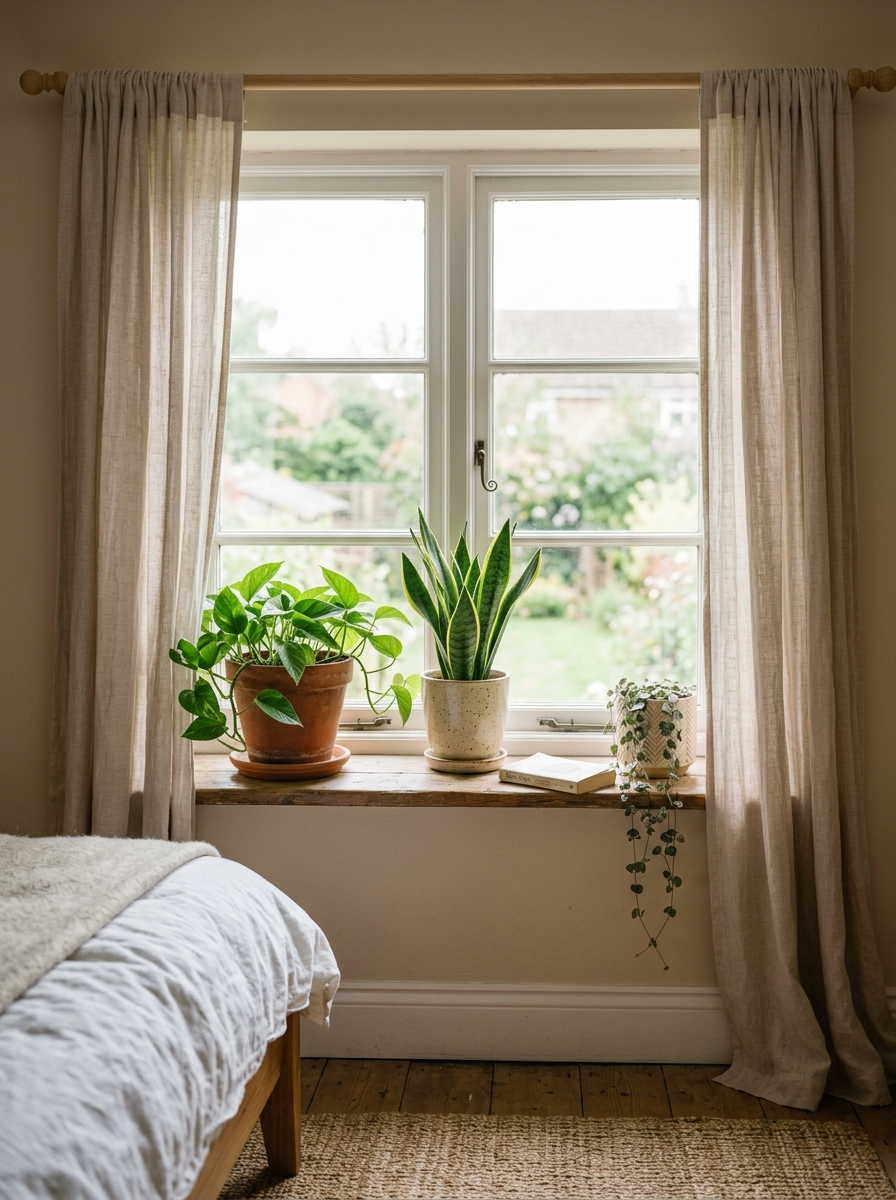
20. Bring in Greenery With Small Potted Plants
Low-light-tolerant plants (pothos, snake plant, ZZ plant) on a windowsill or shelf add life without needing floor space or direct sun exposure.
Watch out for: bedrooms with little natural light will struggle to keep most plants alive long-term — if that’s your room, consider a well-made faux plant instead rather than replacing dying ones every few months.
Best for: rooms with at least indirect daylight for a few hours.
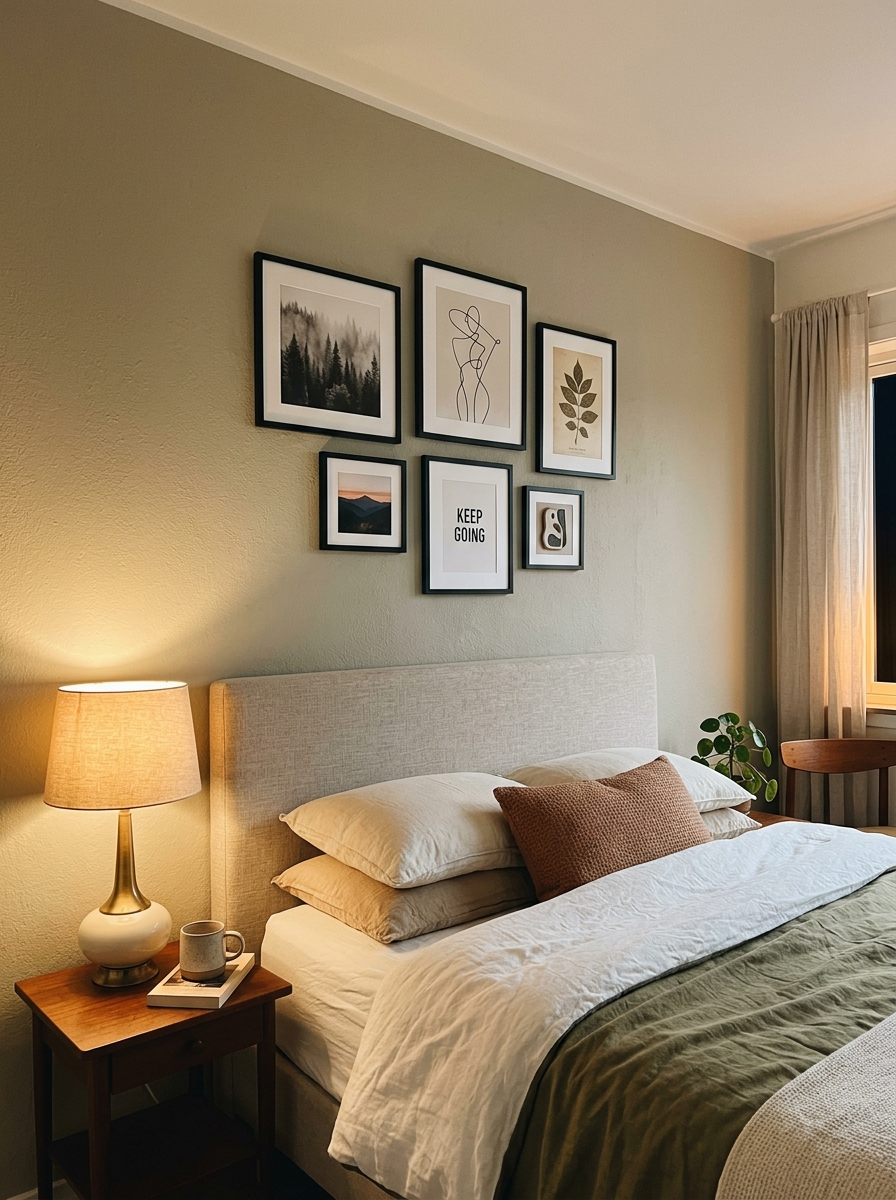
21. Use a Gallery Wall Instead of Large Furniture for Personality
Small framed prints (5×7 or 8×10) stay flat against the wall, unlike a large art piece or furniture item, so you get personality without losing an inch of floor space.
Watch out for: more than 6-8 frames in a genuinely small room can start to feel busy — keep the frame style consistent (same color or material) to keep it feeling curated rather than cluttered.
Best for: anyone who wants visual interest without buying more furniture.
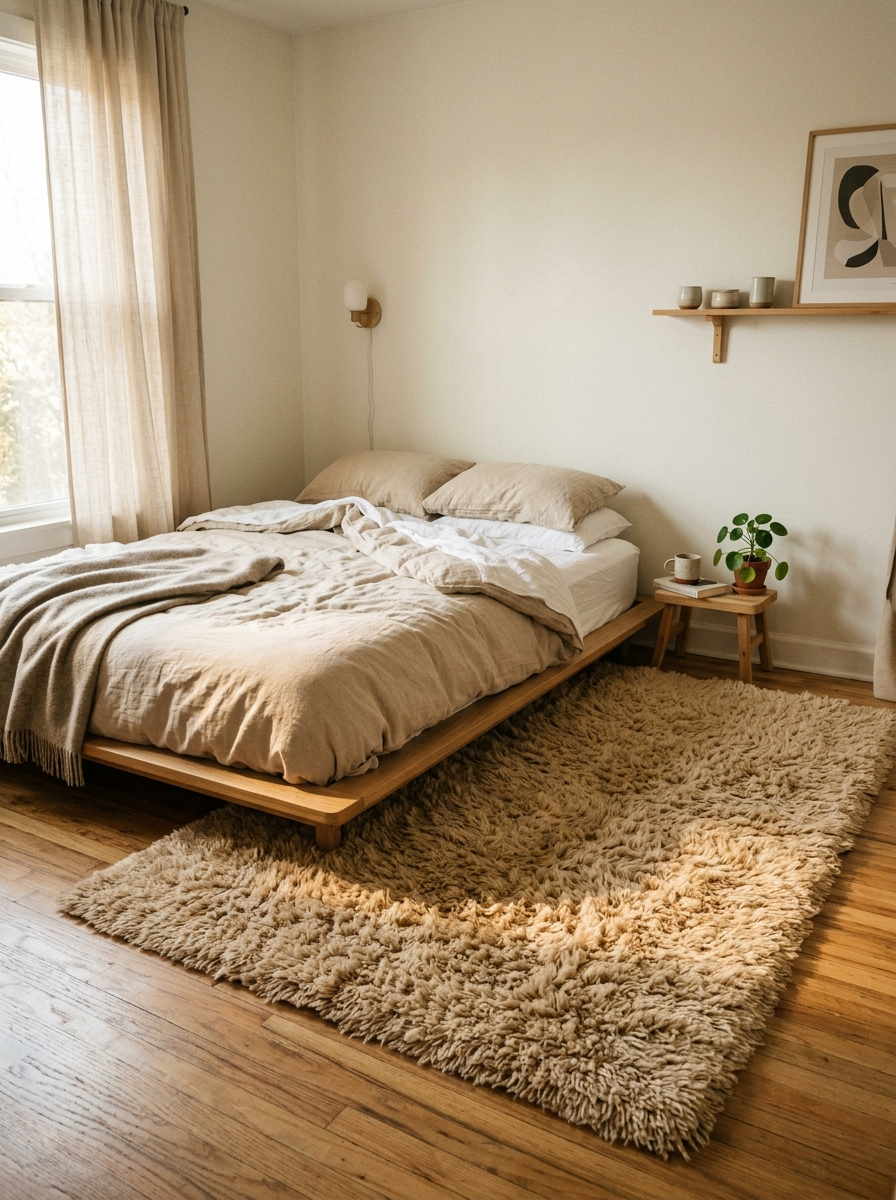
22. Add a Textured Rug to Anchor the Room
Even a 3×5-foot rug beside the bed (rather than trying to cover the whole floor) adds warmth underfoot and visually defines the “bed zone” in an open layout.
Watch out for: a rug that’s too small relative to the bed can look like an afterthought — as a rule of thumb, it should extend at least 12-18 inches past the sides of the bed where visible.
Best for: rooms with hard flooring (wood, tile, laminate).
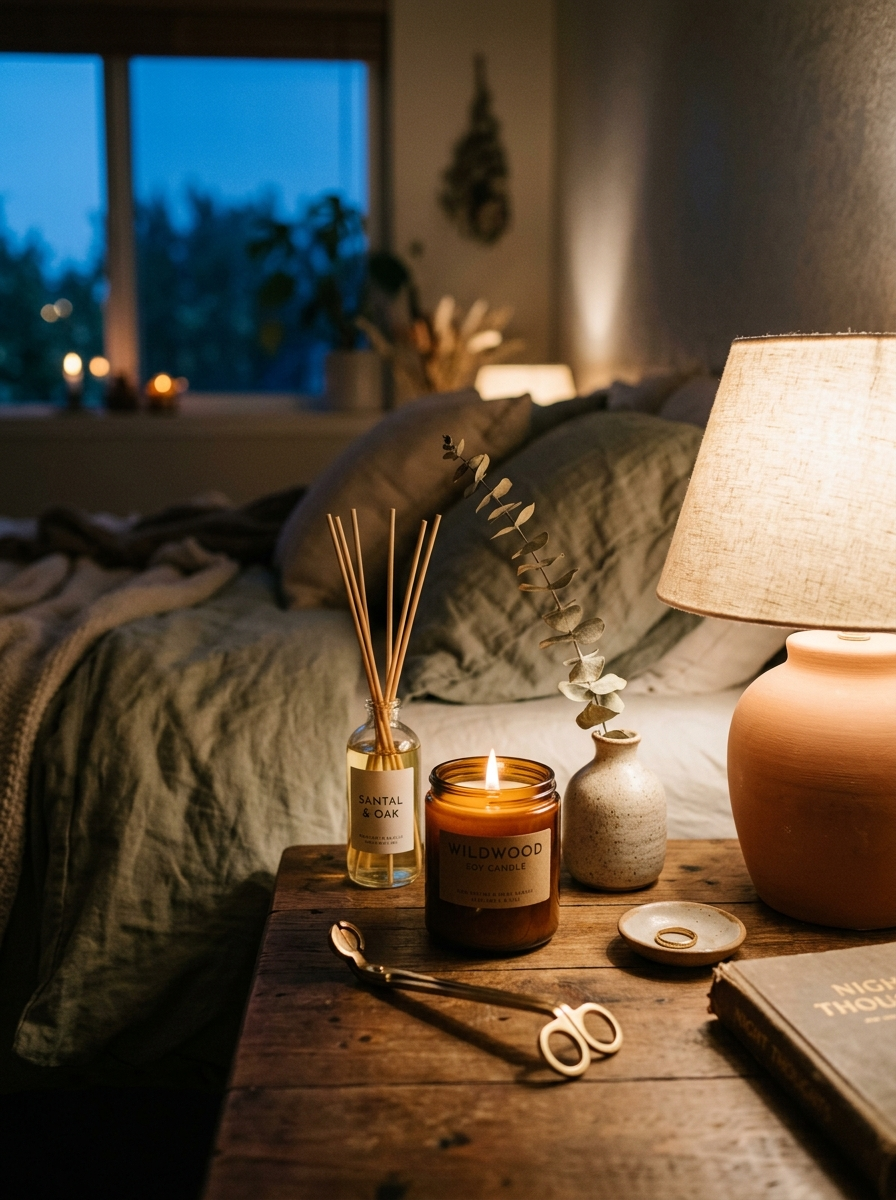
23. Scent the Room With a Candle or Diffuser
A softly scented candle or reed diffuser is one of the only “cozy” upgrades on this list that has nothing to do with visual space — it works even in the smallest room imaginable.
Watch out for: strong or multiple competing scents in a small room can quickly feel overwhelming rather than cozy; one scent, used sparingly, goes further than several.
Best for: literally any room, including ones too small for any other item on this list.